
The best wellies for wide feet and wide calves, from stretchy neoprene Muck Boots to roomy Dunlop Purofort. Five pairs we'd buy, plus help for heel pain.
If you have wide feet, the welly to buy is the Muck Boot Arctic Sport Mid. Its neoprene upper stretches to fit the shape of your foot and calf, which a rigid rubber boot can't do.
For work, buy the Dunlop Purofort Thermo+. Work boots are cut roomier than fashion wellies, and the Purofort has plenty of space in the toe box for a wide foot and a thick sock.
Avoid slim, tailored boots like the Hunter Original Tall unless you can try them on first. They're shaped for narrow feet and slim calves, and going up a size to make room only leaves your heel slipping.
The five wellies we'd buy for wide feet
What to look for in a wide-fit welly
Look for stretch or space. Neoprene boots stretch and mould to your foot. Work boots made from polyurethane are simply cut wider, with a deep toe box and a broad sole.
Check the calf too. Many people with wide feet also have wider calves, and a tall boot with a fixed leg will pinch. An adjustable gusset or buckle at the top, or a stretchy neoprene shaft, solves that.
Bring your insoles into the equation. If you use a cushioned or supportive insole, you need a boot with a removable footbed and enough depth to take it. Work boots and neoprene boots usually have both.
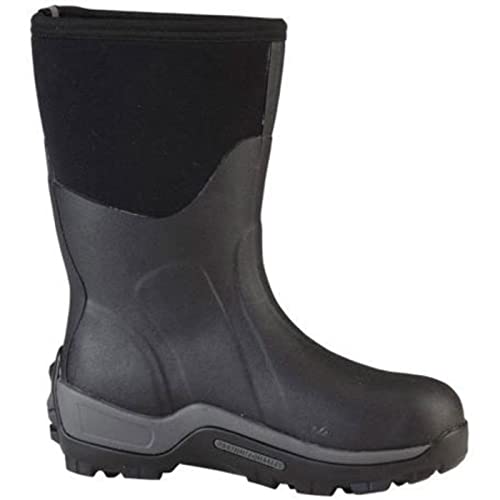
Neoprene is the best friend of a wide foot. It stretches gently around the widest part of your foot and up the leg, so the boot fits your shape rather than forcing your foot into its own.
The Arctic Sport is lined with fleece and has a layer of thermal foam under the footbed, so it’s warm too.
The mid height makes it easier to get on and off, which helps if you have stiff feet or ankles.
It’s sold by a Latvian seller, so allow a little extra time for delivery.
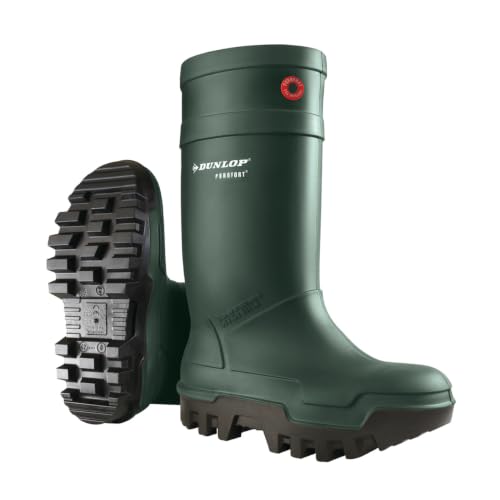
Dunlop’s work boots are cut for long days and thick socks, which suits wide feet well. The toe box is deep, with room for a wide foot and a thick sock.
Purofort is lighter than rubber, so a roomier boot doesn’t mean a heavier one. Most people with wide feet find their usual size works with a thick sock.
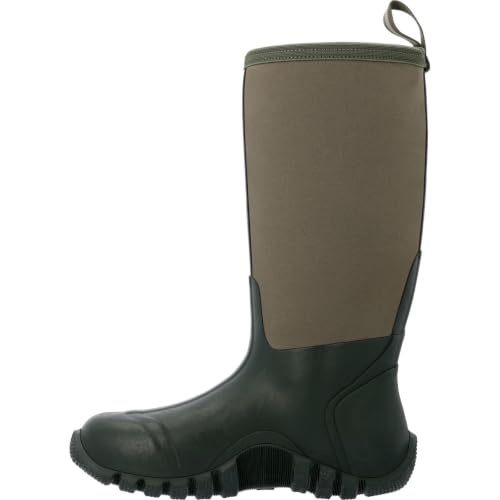
The Edgewater is a lighter Muck Boot with the same stretchy neoprene upper, but a breathable mesh lining instead of fleece. Muck rates it for temperatures from below freezing up to 18°C.
That makes it the better pick for spring and autumn, when a fleece-lined boot gets sweaty. Like the Arctic Sport, it’s sold by a Latvian seller.
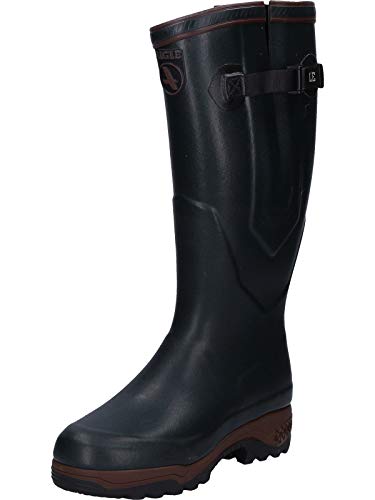
If you’d rather a classic rubber boot, the Parcours 2 is the one to try. The gusset at the top opens up the leg, so it fits wider calves and tucked-in trousers without squeezing.
Aigle’s anti-fatigue sole is cushioned and comfortable over a long walk. It’s a French boot with a more generous fit than most fashion wellies.
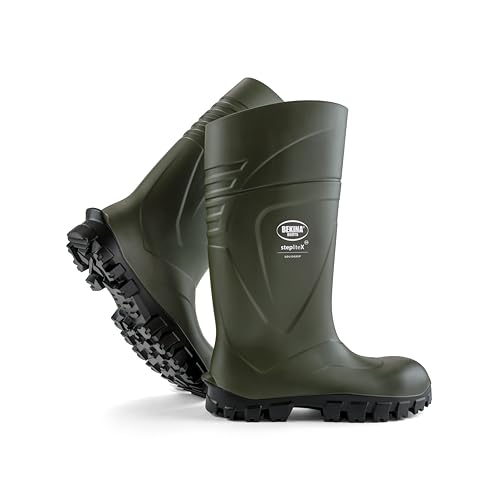
Bekina, a Belgian maker, describes the StepliteX as a wide-shaft work boot, and it’s one of the roomiest boots in the leg. It’s light polyurethane with no toecap pressing on your toes.
It’s a good choice if your calves are the problem more than your feet. It’s sold by a third-party seller, so check delivery times.
Wellies and plantar fasciitis
Plantar fasciitis is one of the most common causes of heel pain, and a flat, hard welly can make it worse.
The HSE's page on plantar fasciitis describes pain around the heel and arch that's usually worst when you take your first steps after rest.
The HSE lists shoes with poor cushioning or support among the causes, along with suddenly doing a lot more walking or standing. That describes a lot of people who switch to wellies for the winter.
Its advice is to wear wide, comfortable shoes with a low heel and a soft sole, and to use soft insoles or heel pads.
The HSE's page on heel pain gives the same advice, and adds that you shouldn't walk or stand for long periods while it's sore. Contact your GP if the pain doesn't improve within two weeks.
Most wellies come with a thin, flat insole. Swapping it for a cushioned one is the cheapest way to make a welly kinder to your heels.
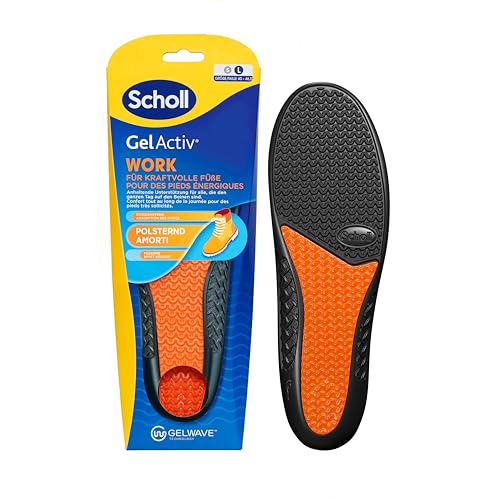
A good insole does more for heel pain than the boot itself. These Scholl insoles have gel pads under the heel and arch to soften each step, which is what the HSE means by soft insoles.
They’re trimmable, so you can cut them to the shape of your welly’s footbed. Take the boot’s own insole out first, or the fit will be too tight.
The listing is for men’s sizes UK 7 to 9. Choose your size range on the listing before you order.
Bunions and wide toes
If your feet are wide because of bunions, the boot needs room across the big toe joint. The HSE's page on bunions recommends wide shoes with a low heel, and avoiding tight or pointy shoes.
A neoprene boot is usually the most comfortable choice here, because it stretches over the joint rather than pressing on it. If you have diabetes, the HSE advises seeing your GP about bunions, as foot problems can be more serious.
Getting the fit right
Try boots on late in the day, when your feet are at their widest, and wear the socks you'll wear in them.
You should be able to wiggle your toes, and your heel should lift only a little as you walk.
Keep your feet dry inside the boot, especially if you've added an insole that holds moisture. The HSE's page on athlete's foot says you're more likely to get an infection if your feet stay wet or sweaty.
Take the insoles out at night, and see our guide to drying wet wellies. If wet boots and coats dry in the hall, watch for condensation on the windows.
Why polyurethane boots fit wider feet
Dunlop's Purofort page explains that the material's structure allows a thinner shaft, which makes the boot more flexible and comfortable. A boot that flexes with your foot pinches less across the widest part.
You'll need wellies that fit, because Irish weather wears them out. Met Éireann describes the Irish climate as shaped by the Atlantic, with cool, windy winters.
For warmer options, see our guide to the warmest wellies, and our Hunter size guide if you're set on Hunters. For walking, see the best wellies for walking.
Wide-fit wellies: quick answers
Do Hunter wellies fit wide feet?
The Original Tall is a slim fit, so it isn’t the best choice for wide feet. If you’re set on Hunters, try them on first, or look at the adjustable and wide-calf versions.
Should I size up in wellies for wide feet?
Usually not. Going up a size adds length, not width, and your heel will slip. Choose a boot that’s cut wider, or one with a stretchy neoprene upper.
Are neoprene wellies good for wide feet?
Yes. Neoprene stretches and moulds to your foot, which makes it the most comfortable material for wide feet and bunions.
Can I put insoles in wellies?
Yes. Take out the boot’s own insole and put the new one in its place. Trim it to fit if needed, and check your toes still have room.