
Keep it under 60%, ideally 30% to 50%. What each hygrometer reading means, why the same air reads higher in a cold room, and how to bring it down.
Indoor humidity is the amount of water vapour in the air, shown as a percentage of the most the air could hold at that temperature. Too high for too long, and condensation and mould follow.
Too low, and you get dry skin and static.
In most Irish homes in winter, the problem is the high end, not the low one.
What the readings mean
Indoor humidity bands
A short spike isn't a problem. A bathroom will read 80% or more straight after a shower, and a kitchen after cooking. What matters is how quickly it comes back down, and where the bedrooms sit overnight.
Why the same air reads higher in a cold room
Warm air can hold more water than cold air. So the same amount of moisture shows a higher percentage when the air cools.
That's why an unheated back bedroom often reads 70% while the living room reads 55%. There may be no more water in the bedroom's air at all; it's simply colder.
It also explains why bedrooms creep up overnight once the heating goes off.
When the air cools far enough, it reaches its dew point: 100% humidity at the surface, and water forms. The coldest surfaces in a room, usually the windows and outside walls, reach their dew point first.
That's condensation, and our condensation guide covers it in detail.
Where the guidance comes from
The figures above follow the US Environmental Protection Agency's guide to mould and moisture, which advises keeping indoor humidity below 60%, ideally between 30% and 50%.
That lower band is hard to hold in an Irish winter, when the outside air is often damp too; Met Éireann describes cloudy, humid weather carried in from the Atlantic as typical of the Irish climate.
In practice, a home that sits between 40% and 55% most of the time, and doesn't stay above 60% overnight, is in good shape.
Choosing a hygrometer
A cheap digital hygrometer is accurate enough to tell you which band you're in. The features worth having are a minimum and maximum memory, so you can see the overnight peak, and ideally a dew point reading.
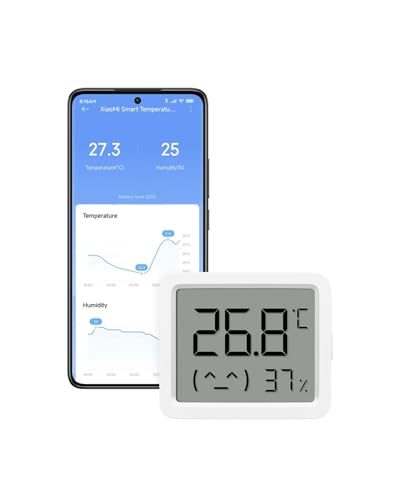
A small, cheap monitor that shows temperature and humidity at a glance. Buy two or three and put one in each bedroom: comparing rooms is the quickest way to find where the damp problem is.
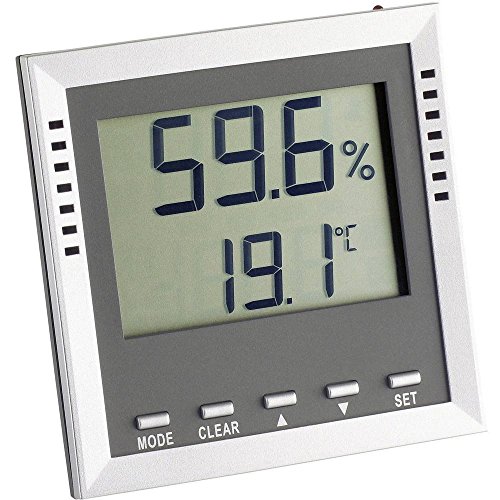
This one adds the two features that make a hygrometer genuinely useful for damp: it shows the dew point, and it remembers the highest and lowest readings.
Check it each morning and you’ll know how high the bedroom went overnight without waking up to look.
How to bring humidity down
If your readings sit above 60% for days at a time, work through these in order. The first three cost nothing.
- Ventilate. Air rooms every morning, keep trickle vents open, and run extractor fans when cooking or showering.
- Cut the sources. Lids on pots, and washing dried outside or in a ventilated room where you can.
- Keep the heat steady. Respond, the Irish housing association, recommends a constant low level of heating, ideally 18°C to 21°C. Warmer air reads lower, and warmer walls stay dry.
- Use a dehumidifier. Set it to 50% to 55% and it switches off once the room gets there. Our dehumidifier guide explains which type suits which room.
If a wardrobe or a corner is the trouble spot rather than the whole room, our guides to mould in the wardrobe and black mould in the bedroom cover those.