
Keep the fridge and broadband running through the next storm. The power station and generator we'd buy for an Irish home, with run times and safety rules.
For most Irish homes, the answer is a portable power station, and our pick is the BLUETTI AC70. It's silent and needs no fuel, so it can sit in the kitchen.
Its 768Wh battery keeps a fridge cold and the broadband on through a typical outage, then recharges from the wall in about 90 minutes once the power's back.
A petrol generator earns its place in rural homes at the end of long overhead lines, where cuts can last days. Our pick there is the Pro Splash 3300W.
It has 3kW of output for a heater or kettle, plus a socket that takes an Irish plug.
A generator has to run outdoors, and connecting one to your house wiring is a job for a registered electrician. More on that below, because getting it wrong can kill a line worker.
The two we'd buy
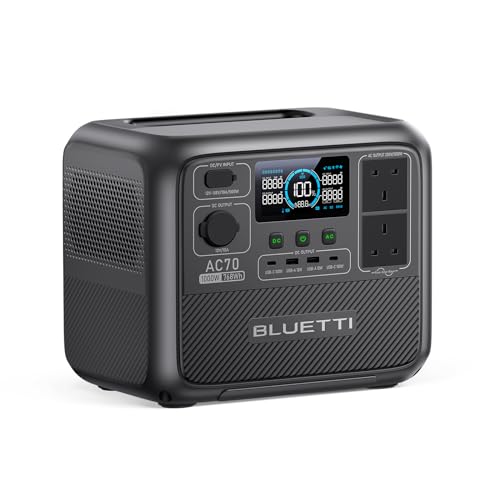 Most homes
BLUETTI AC70
|
VS |
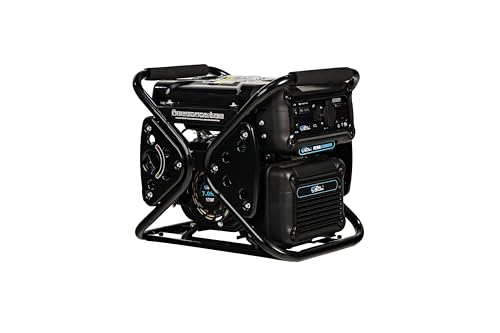 Long rural cuts
Pro Splash 3300W
|
|---|---|---|
|
Yes
|
Use indoors |
No, outdoors only
|
|
1,000W (2,000W power lifting)
|
Output |
3,000W rated, 3,300W max
|
|
768Wh, then recharge
|
Runs for |
Up to 5 hours per tank
|
|
Wall socket or solar panels
|
Refuel or recharge |
Petrol, 11 litre tank
|
|
2 Irish 3-pin
|
Sockets |
1 Irish 3-pin, 1 European
|
|
€549.00
|
Price |
€369.99
|
| Check price | Check price |
For the outages most of us actually get, this is the one we’d buy. 768Wh keeps a fridge freezer and the router going for most of a day, with a couple of lamps on top, and it’s quiet enough to leave running in the kitchen overnight.
Its AC sockets share 1,000W. Power lifting mode runs resistive appliances up to 2,000W, such as a kettle, at reduced power, so they work but take longer.
The battery is lithium iron phosphate (LiFePO4), the type rated for thousands of charge cycles. It reaches 80% in 45 minutes from the wall, or charges from up to 500W of solar panels if the outage drags on.
Both AC sockets are Irish 3-pin, so your plugs go straight in with no adapter.
How long 768Wh lasts
Battery capacity is measured in watt-hours (Wh). Divide it by an appliance's wattage and you get a rough run time.
You lose some energy converting battery power to mains power, so we've assumed about 85% of the rated capacity is usable. These are estimates for the AC70 running one appliance at a time.
Run times on the 768Wh AC70
| Broadband router (10W) | about 65 hours |
| LED bulb (8W) | about 82 hours |
| Fridge freezer, average draw (40W) | about 16 hours |
| Laptop (50W) | about 13 hours |
| Electric blanket (60W) | about 11 hours |
| Compressor dehumidifier (150W) | about 4 hours |
| Phone charges | about 44 full charges |
| Kettle | Works in power lifting mode, but slowly, and each boil takes a noticeable share of the battery. |
| Electric shower or heater | No. These draw 2,000W to 9,000W, which is beyond any portable power station this size. |
A fridge freezer cycles on and off, so its average draw is far below the figure on its label. Keep the door shut and a full freezer stays frozen for many hours on its own, which stretches the battery further.
The figures fall as you add appliances. Lights and phones together barely dent a battery this size. Add the fridge and an electric blanket overnight and you'll still get through most of a day.
For cuts that last two or three days
The AC70 handles a typical outage, but a fridge running all day uses about 1.6kWh with the router and lights, more than double what it holds.
For a cut that runs into a second or third day, you need a bigger battery.
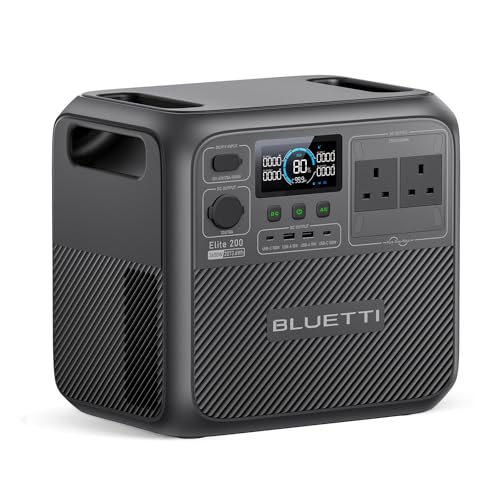
With nearly three times the AC70’s battery, this keeps the router and phones going for about four days, with lamps on in the evenings.
Add a fridge freezer and you get about a day, or close to three if you run the fridge in blocks of a few hours and keep the doors shut in between.
Its 2,600W output boils a kettle at full power, which the AC70 can’t.
Charging from the wall and a DC source together gets it to 80% in 50 minutes, so a few hours of power, or a run in the car, tops it right up.
The battery is lithium iron phosphate, rated for more than 6,000 cycles.
Only need the router and phones? The smaller Elite 30 V2 is in the power cuts section of our shop.
Storm Éowyn showed how long cuts can last
Storm Éowyn in January 2025 was the worst storm ESB Networks has dealt with. At the peak, around 768,000 customers were without power, TheJournal reported, and up to 100,000 were told they'd wait into the following week.
For some it was far longer. The Irish Times reported that almost 700 homes were still cut off more than a fortnight later, mostly in parts of Roscommon, north Galway, Mayo and south Leitrim.
Two lessons stand out. Most outages are measured in hours or a few days, which is exactly what a power station covers.
Rural homes at the end of long overhead lines can wait much longer, and that's where a generator earns its keep.
When a generator is the better buy
If you've sat through a week without power before, a battery won't be enough. A generator runs as long as you have petrol, and it can power the things a power station can't, like a 2kW heater.
For homes where cuts last days, this is the generator we’d pick. Its 3kW of steady output runs a 2kW heater with room left for the fridge and lights.
It’s an inverter generator, so the power is clean enough for laptops and TVs, with harmonic distortion under 3%. The 11 litre tank runs for up to five hours before a refill.
One socket takes an Irish 3-pin plug and the other is European. Powering your house circuits instead needs a changeover switch, which is the next section.
Safety rules before you start it up
Generators are the right tool for long rural outages, but they're also where people get hurt. The rules are short and not optional.
The Health and Safety Authority’s generator safety alert is blunt: never connect a generator to a socket or to your distribution board.
It sends power back out onto the network and puts others in danger, including the crews repairing the lines.
ESB Networks adds that a standby generator should never be connected directly into the electrical circuits or the metering point, and that it should always be installed by a registered electrical contractor.
If you want a generator to power your house circuits, that means a properly fitted changeover switch.
The other rules are about fumes. ESB Networks says to keep generators outdoors and never use them indoors or in enclosed spaces.
A petrol engine produces carbon monoxide, which you can't see or smell, so that rules out an attached garage or a shed with the door open.
Without a changeover switch, run appliances straight from the generator's own sockets with outdoor-rated extension leads. Let it cool before you refuel, and store the petrol away from the house.
Keeping the house warm and dry
A winter power cut usually means no heating, because most oil and gas boilers need electricity for their pump and controls. Rooms cool quickly, and cold rooms are where condensation and damp take hold.
A power station can't run an electric heater for long, but it can run an electric blanket all night.
For when the power is on, our guide to the cheapest electric heater to run explains why every plug-in heater costs the same per hour, and how to spend less.
If the house has been cold and closed up for days, expect wet windows when it warms up again. Run a dehumidifier once the power is back; our dehumidifier running cost calculator shows what that costs.
Treat any fallen electricity wire as live and keep well clear of it. Report it to ESB Networks on 1800 372 999, the emergency number on their customer support page.