A purifier helps, but only after you fix the damp. The HEPA purifier we'd buy for an Irish bedroom, how to size one, and when a 2-in-1 makes more sense.
An air purifier with a true HEPA filter catches mould spores floating in the air, and for anyone with asthma or a mould allergy that can make a real difference to how a bedroom feels at night.
What it can't do is touch the mould growing on your wall or curtains. A live patch keeps releasing spores faster than any purifier can clear them, and the damp that feeds it carries on regardless. So the order matters.
Clean off the mould and dry the room out first; the purifier comes after.
If you haven't done the first two steps yet, start with cleaning black mould safely and our dehumidifier guide.
- Traps airborne mould spores and dust in its filter
- Eases night-time symptoms for people with allergies or asthma
- Removes mould growing on walls, furniture or fabric
- Lowers humidity or stops condensation
Sizing: ignore the square metres on the box
Purifier makers quote coverage in square metres, and the figures are generous. The number that matters is the CADR, or clean air delivery rate: how many cubic metres of filtered air the machine puts out each hour.
The US Environmental Protection Agency gives a simple sizing rule in its guide to air cleaners. Converted to metric, it works out at a CADR of roughly 12 m³/h for every square metre of floor, assuming a normal ceiling height.
- A 10 m² box room needs a CADR of about 120 m³/h.
- A 14 m² double bedroom needs about 170 m³/h.
- A 20 m² living room needs about 240 m³/h.
- A 30 m² open plan room needs about 360 m³/h.
By that rule, Philips' 2200 Series, with a CADR of 420 m³/h, comfortably covers rooms of up to about 35 m².
That's well short of the 109 m² on its box, but more than any Irish bedroom needs, which means it can run on a low, quiet fan setting and still do the job.
The EPA's air cleaner guide also points out that a purifier filters more air at higher fan speeds and over longer run times. For mould spores, leave it running all the time in the room where you sleep.
Our two picks
 01
01
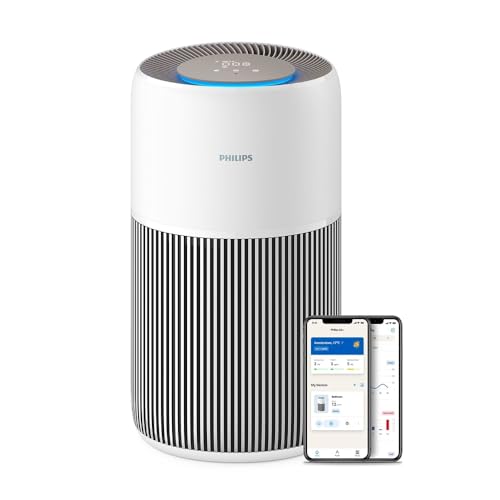
This is the purifier to buy if mould or allergies are the main worry and you already have the damp under control.
Its three-layer filter combines HEPA with activated carbon, so it deals with musty smells as well as spores, and it’s certified for allergy sufferers by ECARF, the European Centre for Allergy Research Foundation.
Philips says it runs as quietly as 13 dB(A) on its lowest setting, which is close to silent.
The filter lasts up to three years by Philips’ estimate, and the purifier tracks its life and tells you when to change it.
With a CADR of 420 m³/h it’s oversized for a bedroom. That’s a good thing: you can run it on a low setting overnight and still clear the air several times an hour.
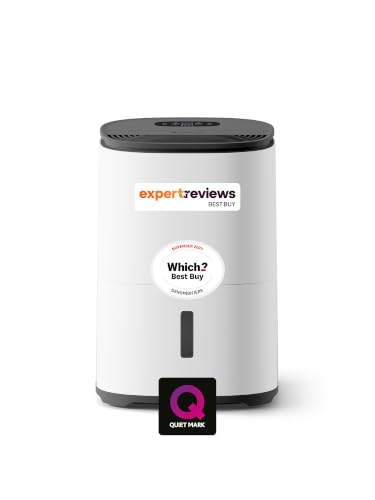
If you haven’t bought a dehumidifier yet, this does both jobs in one machine. It dries the room like any 12 litre compressor model and passes the air through a medical-grade H13 HEPA filter on the way.
It draws 151W at 20°C, about 5.4c an hour, and it’s quiet enough for a bedroom at 35 dB(A). Meaco’s five year warranty is the longest of anything we recommend.
The trade-off is that the purifier only runs while the fan does, and Meaco doesn’t publish a CADR for it. For a single damp bedroom that’s fine. For asthma or a severe allergy, a dedicated purifier is the better tool.
Two-in-one or two machines?
For a single damp bedroom where nobody has a serious allergy, a 2-in-1 is the tidy answer. One plug and one tank to empty, with the air filtered every time the dehumidifier runs.
Two separate machines make more sense in two situations.
The first is when someone in the house has asthma or a mould allergy, because a dedicated purifier with a published CADR can run all night on its own, whether or not the room needs drying.
The second is when the damp is in one room and the person who reacts to it sleeps in another.
The Asthma Society of Ireland lists mould spores among the common household triggers of asthma, along with dust mites. A HEPA purifier catches both, which is another reason a dedicated one earns its place in an allergy sufferer's bedroom.
The wider picture
The World Health Organization's European office reviewed the research for its guidelines on dampness and mould, and its main recommendation was prevention: stop persistent damp and mould growth indoors. Cleaning the air comes after that.
In practice, that means the purifier is your second purchase, not your first. Our condensation guide covers the free fixes that do most of the work.
Some machines sold as air purifiers work by producing ozone, often advertised as “activated oxygen” or something similar. Steer clear of them.
The US Environmental Protection Agency’s review of ozone generators found that ozone can damage the lungs and worsen asthma.
To actually kill mould in the air, ozone levels would have to be 5 to 10 times higher than public health standards allow, and even then it has little effect on mould growing in porous materials.
Stick to a purifier that uses a HEPA filter, and check the listing doesn’t mention ozone.