
The best wellies for women, from classic Hunters to a Spanish Chelsea welly and warm neoprene Muck Boots. Five pairs we'd buy, with help on calves and sizing.
For most women, the welly to buy is the Hunter Original Tall. It's natural rubber, handmade from 28 parts, and it looks as good in town as it does on a muddy walk. It suits slim and average calves best.
If you'd rather a short boot you can wear all day, buy the Toni Pons Colton. It's a Chelsea-style welly from a Spanish shoemaker, with a zip at the side, so it slips on and off easily.
For cold mornings, the women's Muck Boot Arctic Sport II Mid is the warm choice. Its neoprene upper stretches over wider calves too.
The five women's wellies we'd buy
What's different about women's wellies
Women's wellies are usually built on a narrower last, with a slimmer heel than men's or unisex boots. That stops your heel lifting, which is the main cause of blisters in a welly.
The leg is the part to check. A tall, fitted boot like the Hunter Original looks neat, but it has a fixed width.
If your calves are wider, choose a boot with stretch, a gusset or a buckle, or a shorter style that finishes below the calf.
Height is a choice too. A tall boot keeps out deep puddles and wet grass. An ankle or mid-height boot is quicker to get on and easier to drive in.
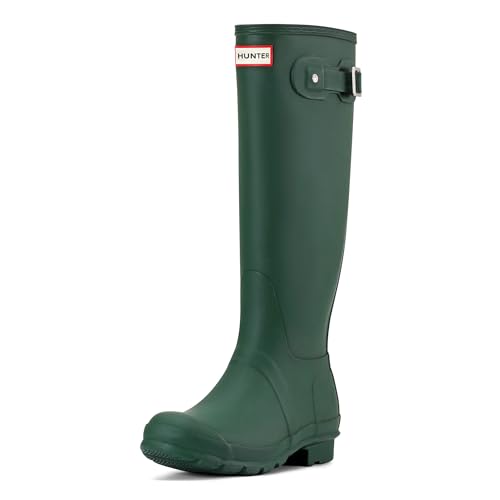
This is the classic, and for good reason. The Original Tall is handmade from natural rubber, with a soft finish and a tailored leg that sits close to the calf.
It comes in whole sizes only. If you’re a half size with a slim foot, go down a size and wear a welly sock. Our Hunter size guide covers calf width and conversions.
It isn’t insulated, so add a warm sock from November to March.
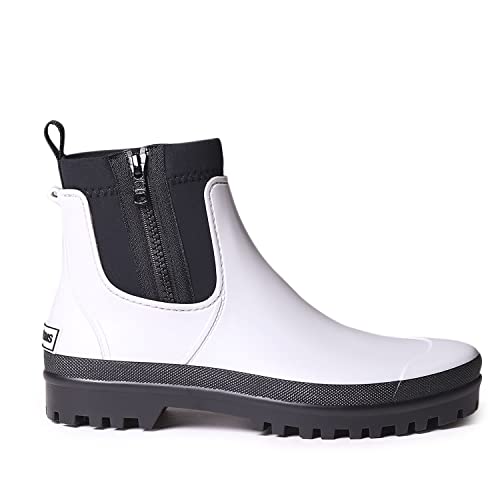
Toni Pons is a Spanish shoemaker best known for espadrilles, and the Colton is its take on a short welly.
It looks like a Chelsea boot, with an elasticated panel at the side, and a zip makes it easy to get on and off.
It’s the pair to wear on a wet day in town or on the school run. The textile lining is comfortable for all-day wear.
It’s sold directly by Toni Pons, so it ships from Spain.
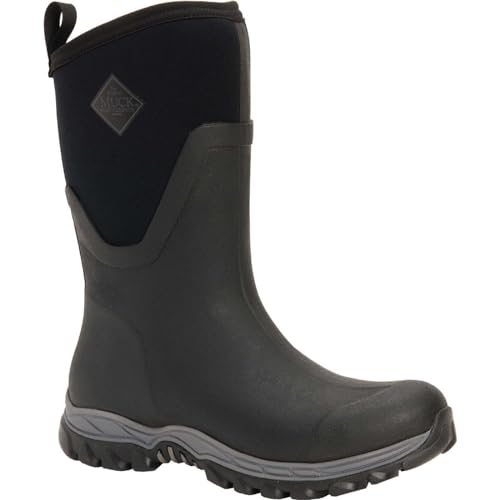
This is the women’s version of Muck Boot’s warmest everyday boot. The 5mm neoprene upper flexes and stretches, so it’s comfortable on wider calves, and the fleece lining keeps your feet warm on frosty mornings.
The mid height is easy to pull on and doesn’t dig into the back of your knee. A dual density insole adds cushioning for long walks.
It’s sold by a third-party seller, so check the delivery time before you order.
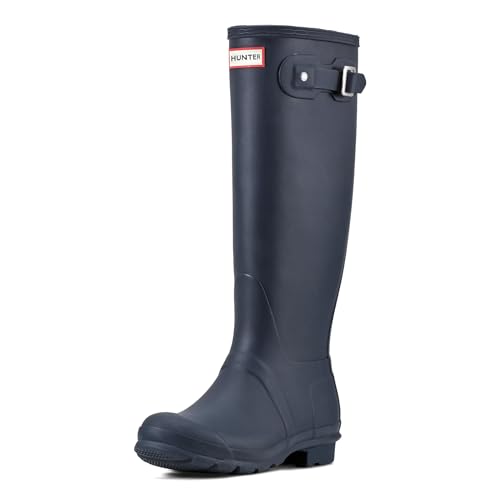
The Play Tall is Hunter’s lighter, more casual tall welly. It’s still vulcanised natural rubber, but it usually costs less than the Original Tall.
The fit isn’t the same as the Original, so check the size chart on the listing rather than assuming your Original size carries over.
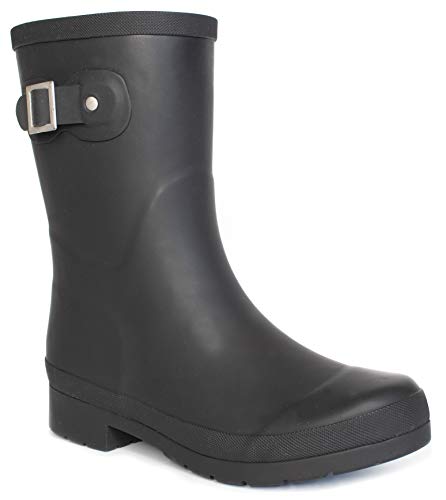
Chooka is an American rain boot brand, and this mid-height welly is a good budget pick. It has a soft lining and a memory-foam insole, which is more comfort than most cheap wellies offer.
Chooka suggests going up a size if you have wider calves. At this price, it makes a good spare pair for the car or the garden.
Getting the size right
Most wellies use UK sizes, with an EU size alongside. Women's sizes usually run from about UK 3 (EU 36) to UK 9 (EU 43), but check the chart for each boot, as the conversions vary a little.
If you're between sizes, think about your socks. A thick welly sock fills a little extra room.
Going too small is worse: the HSE's advice on bunions is to avoid tight, pointy shoes, and a cramped welly squeezes your toes the same way.
Unisex boots are sized for men's feet, so they can be wide at the heel for a woman. If you buy a unisex style, a thicker sock or an insole helps the fit.
Comfort for long days
Rubber wellies have a flat, thin sole. The HSE's page on heel pain suggests shoes with a low heel and a cushioned sole, and soft insoles or heel pads.
If you wear wellies for hours at a time, add a cushioned insole. Our guide to wellies for wide feet covers one that fits inside a welly.
Keep your feet dry, too. The HSE's page on athlete's foot says you're more likely to get an infection if your feet stay wet or sweaty. Change your socks after a long day, and take the insoles out to dry.
Looking after natural rubber
Hunters and other natural rubber boots last for years with a little care.
Nokian Footwear, the Finnish boot maker, says in its rubber boot care guide to dry rubber boots at room temperature and store them upright, out of direct sunlight.
Rubber can develop a white film called bloom. It's normal and wipes off with a damp cloth. Store your boots somewhere dry and aired. If the hall or porch feels damp, our guide to ideal humidity explains what to aim for. Our guide to drying wet wellies shows how to dry a pair overnight without cracking the rubber.
You'll get plenty of use out of them. Met Éireann describes the Irish climate as shaped by the Atlantic, with cool, windy winters and heavy autumn rain.
For long walks, see our walking wellies guide, and for the warmest boots, warmest wellies.
Women's wellies: quick answers
Are Hunter wellies good for women with wide calves?
The Original Tall has a slim, fixed leg, so it can be tight on wider calves. Look at Hunter’s adjustable versions, or choose a neoprene boot like the Muck Arctic Sport II, which stretches.
What's the difference between women's and unisex wellies?
Women’s wellies are built on a narrower last, with a slimmer heel. Unisex boots are sized for men’s feet, so they can feel loose at the heel.
Are short wellies any good?
For town and light garden work, yes. They’re easier to get on and cooler to wear. For deep puddles or long wet grass, a tall boot keeps you drier.
What socks should I wear with wellies?
Wool or wool-blend socks that come above the top of the boot. They stop the rubber rubbing your calf and keep your feet warmer and drier than cotton.