
Dry wet wellies overnight without cracking the rubber, and get coats dry without steaming up the house. The quick method, the kit that helps and what it costs.
The fastest safe way to dry wellies is to get the standing water out, pull out the insoles, stuff them with newspaper for an hour, then finish them with gentle warm air overnight.
A low-heat boot dryer does that last part while you sleep.
What you shouldn’t do is stand them on a radiator or in front of the stove. Rubber hates direct heat, and a boot that dries fast that way is a boot that cracks at the ankle by spring.
Coats are a different job. They hold a lot of water, and all of it ends up in the air of your hall or kitchen. Get that part wrong and you swap wet clothes for wet windows.
Wet wellies to dry by morning
-
Tip them out and wipe them down
Turn each boot upside down and give it a shake. Rinse mud off the outside with cold water, because dried mud draws moisture out of the rubber.
-
Take out the insoles
Most of the water sits in the insole and the lining under it. Dry the insoles separately, flat, on a warm (not hot) surface.
-
Stuff them with newspaper
Scrunch newspaper or an old towel into the foot and leave it for about an hour. Swap it once it’s soaked. This pulls out the bulk of the water before any heat goes near the boot.
-
Finish with gentle warm air
Put a boot dryer in each boot overnight, or stand them upright in a warm, airy room. By morning the lining should be dry to the touch.
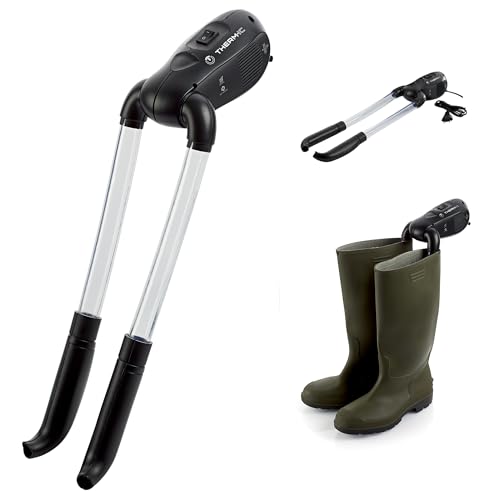
This is the dryer we’d buy for wellies. Therm-ic is a French brand that makes boot dryers for skiers and hunters, and the Hunting version has extra-long tubes that reach right down to the toe of a tall boot.
The tubes adjust, so the same dryer works for a child’s wellies or your walking shoes.
It blows gentle warm air into the foot, which is where a welly stays wet longest, and Therm-ic says it dries boots in a few hours.
It comes with a European two-pin plug, so you’ll need a travel adapter for an Irish socket. A plug-in timer is worth adding so it switches off once the boots are done.
A boot dryer pays for itself in comfort more than money. You stop putting on cold, clammy boots in the morning, and the lining doesn’t sit damp long enough to start to smell.
If you have one pair and the boots only get splashed, you can manage without one. If your wellies get soaked through most days, or there are children’s boots to deal with too, it’s worth having.
Why the radiator does more harm than good
Rubber is happiest at room temperature. Nokian Footwear, the Finnish boot maker, tells owners in its rubber boot care guide to dry boots at room temperature and store them upright, somewhere cool and out of direct sunlight.
Direct heat dries the rubber faster than it dries the lining, so you get boots that feel dry on the outside and are still wet inside.
Do that every evening and the rubber hardens, then splits along the crease where your ankle bends.
There’s a safety side too. Fire Safety Ireland’s fire safety at home leaflet lists using a heater or the cooker to dry clothes among the things not to do.
A pair of boots wedged against a stove, or a coat draped over a plug-in heater, is exactly what it means.
Welly drying tips worth ignoring
On a cool or low setting, kept moving, it helps. Full heat aimed at one spot is the radiator problem in a smaller package.
The heat and the tumbling damage the rubber and the lining. Keep them well away from it.
Not in an Irish winter. Cold, damp air dries nothing, and the lining will still be wet next morning.
It does. It soaks up the standing water fast and holds the boot’s shape while it dries. Swap it once it’s wet through.
Drying a wet coat without wet windows
A soaked rain jacket or wax coat can hold a surprising amount of water. Hang it in a cold hall and it drips for a day. Hang it in a warm kitchen and that water ends up on the windows.
The Department of Housing’s home ventilation guidance is clear that the moisture we make indoors needs somewhere to go.
In practice, that means drying coats in one room with the door closed, and either a window open a crack or a dehumidifier running.
Hang the coat on a proper hanger so the shoulders keep their shape, with the zip open and the hood down. Turn it inside out halfway through if the lining is wet.
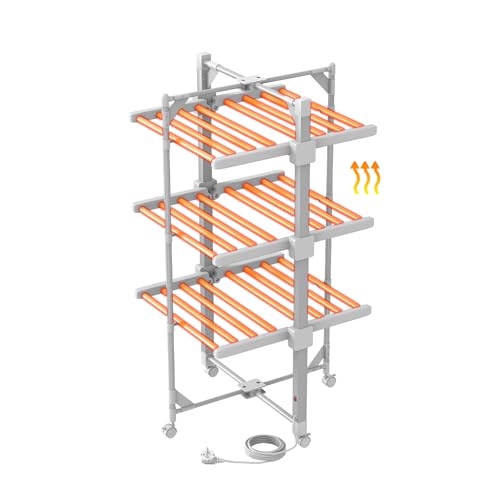
A heated airer is gentle enough for a rain jacket and it doubles as your everyday clothes airer.
Hang the coat from the top rail on a hanger, or lay it across the bars, and it will be dry in a few hours instead of a day.
At 230W it costs about 8.3c an hour to run, so a three hour session to dry a coat comes to about 25c. It folds flat and sits on wheels, so it can live behind the utility room door.
Wax jackets are the exception. Let those dry slowly at room temperature, or the wax can soften and mark.
If you dry a lot indoors, a dehumidifier in the same room speeds everything up, the coats and the washing alike.
Our guide to drying clothes with a dehumidifier shows how to set up a drying room, and the heated airer guide compares the airers worth buying.
Why damp boots are worth fixing
Irish weather is built for wet feet. Met Éireann describes the Irish climate as a run of cloudy, humid weather with rain, then brighter, colder weather with showers. That pattern means the boots rarely get a dry day to recover.
Wearing boots that never dry out properly is bad for your feet.
The HSE’s page on athlete’s foot says you’re more likely to get an infection if the skin on your feet is wet or sweaty, and advises keeping your shoes clean and dry.
Damp clothes are a problem for the house too. The Asthma Society’s advice on triggers at home notes that mould spores can be found in piles of damp clothes.
A heap of wet coats and boots in the hall all winter is the start of that.
Where to keep wet boots and coats
Pick one spot near the door for wet gear. A rubber drip tray under the boots saves the floor, and hooks above it keep coats off the radiator.
Keep that spot ventilated. A closed porch or a cupboard under the stairs full of wet coats turns into the damp corner of the house, and you’ll smell it in the coats before you see any mould.
If that’s already happened, our guide to mould in the wardrobe covers rescuing clothes that smell of damp.
Watch the windows in the room where you dry things. If they’re streaming in the morning, the room needs more air or a dehumidifier. Our page on condensation on windows explains what the water is telling you.
Drying wellies: quick answers
How long do wellies take to dry on their own?
A splashed pair dries in a few hours. A pair that’s been filled with water can take a day or two at room temperature, longer if the lining is thick.
Newspaper and a boot dryer bring that down to a single night.
How do I dry neoprene-lined wellies?
Take out the insole and stuff the foot with newspaper. Then finish with a low-heat boot dryer. Neoprene holds water, so give it the full night.
How do I stop wellies smelling?
Dry them fully every time, because the smell comes from a lining that stays damp. Wash the insoles now and then. A little bicarbonate of soda sprinkled into the dry boots overnight, then shaken out, also helps.
Is a boot dryer safe to leave on overnight?
Low-heat boot dryers are designed to run unattended. A plug-in timer stops it once the boots are dry, and follow the manufacturer’s instructions. Don’t cover the dryer or the boots while it runs.