
The best wellies for farmers, picked for frosty yards and long days on your feet. Five pairs we'd buy, from a budget PVC boot to Dunlop's warmest Purofort.
For most farmers, the boot to buy is the Dunlop Purofort Thermo+. It's light for a boot this warm, it's rated to -50°C, and it has a protective toecap for the days you're working around cattle.
If you don't need a toecap, the Bekina StepliteX is a lighter, cheaper polyurethane boot with a wide leg.
For a softer rubber boot that's easier on the legs over a long walk, the Aigle Parcours 2 Iso is the one.
A farm boot does a harder job than a walking welly. It goes on before dawn and comes off after dark, and it spends the day on wet concrete and in slurry.
That's why we've picked mostly work boots here, with one budget pair for spare use.
The five farm wellies we'd buy
What a farm welly has to do
Start with the job, then pick the boot. A dairy farmer standing in a parlour needs warmth and grip on wet floors.
A suckler farmer walking fields needs a boot that's comfortable to walk in, and one that won't split on briars and wire.
Material matters most. Polyurethane boots like Dunlop's Purofort and the Bekina StepliteX are light, and they're warmer than rubber because the material holds tiny pockets of air.
Natural rubber is softer and grips well on wet stone, but it needs more care and it splits sooner under hard daily use.
Then decide on a toecap. If you work with cattle or machinery, a safety boot with a toecap and a midsole is worth the extra weight. If you mostly walk land, a boot without one is lighter.
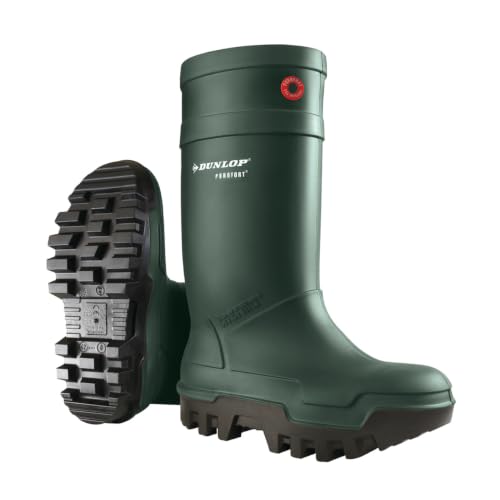
This is the boot we’d buy for a working farm. The Thermo+ is the warmest boot in Dunlop’s farm range, and it stays light because Purofort is foamed with air rather than solid like rubber.
It has a protective toecap and midsole, so a stray hoof or a dropped gate is less of a worry. The sole is SRC rated for slip resistance, the standard you want on wet concrete.
Dunlop makes Purofort boots in Europe. The fit is roomy, so most people take their usual size and wear a good sock.
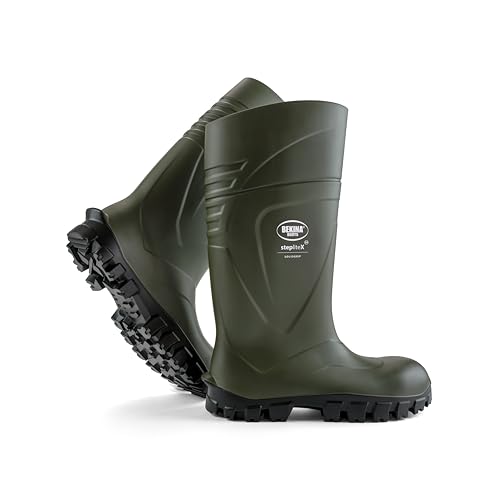
Bekina is a Belgian boot maker, and the StepliteX is its farm boot. It’s polyurethane like the Dunlop, so it’s light and warm, but it has no toecap or steel midsole. That makes it lighter again and a little cheaper.
The shaft is wide, which suits big calves and makes it easy to tuck in overtrousers. The sole is built for grip on mud and wet floors.
It’s sold by a third-party seller, so check the delivery time before you order.
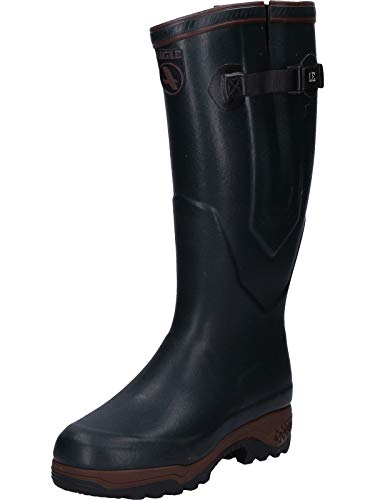
If you’d rather a rubber boot, this is the one we’d buy. Aigle is a French brand that has made rubber boots since the 1850s, and the Parcours 2 is its best-known field boot.
The Iso version adds an extra layer in the sole to keep the cold out.
The anti-fatigue sole makes a long walk across land noticeably easier, and the adjustable gusset at the top lets you open the leg for a big calf.
It’s better for walking land than for standing on concrete all day. Rinse it after use and dry it at room temperature, and it will last.
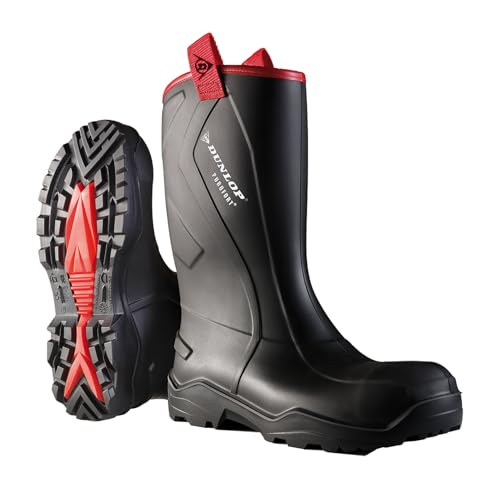
The Rugged is Dunlop’s heavy duty Purofort boot. It’s built for contractors as much as farmers, with a steel toecap and an S5 safety rating.
Dunlop gives it a closer, sneaker-style fit than the standard Purofort, which helps on ladders and in the tractor cab. If warmth matters more than toe protection, the Thermo+ is the warmer boot.
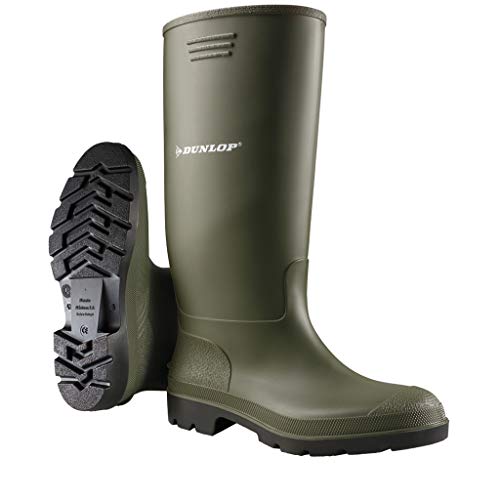
Every farm needs a few spare pairs by the back door for visitors and helpers. This is the boot for that job. It’s plain waterproof PVC and costs a fraction of a Purofort.
It isn’t insulated and PVC stiffens in the cold, so it’s not a boot for daily wear through the winter. For an occasional pair, it’s hard to beat on price.
Grip on wet concrete and slurry
Slips cause a lot of farm injuries, and the boot is the cheapest place to start.
The Health and Safety Authority's guidance on footwear says the slippery surface and the likely contamination must both be considered when you choose slip-resistant footwear.
In practice, that means a deep, open tread for mud and fields, and a softer sole with a tighter pattern for wet concrete and parlour floors.
All of the work boots above carry an SRC slip rating, which is tested on both wet tiles and steel.
Keep the tread clean. A sole packed with dried muck has no grip left at all, however good it was in the shop.
Warmth in a cold yard
Ireland rarely gets deep snow, but a frosty morning in the yard is cold enough.
Met Éireann notes that the Atlantic keeps Irish temperatures mild, with relatively mild winters, so the cold you feel on a farm usually comes from standing still on wet ground.
That's where polyurethane earns its keep. Dunlop's Purofort page says its farm boots are insulated to -20°C, with the Thermo+ rated to -50°C.
A rubber boot gets its warmth from your sock, or from a neoprene lining if it has one.
If warmth is your main concern, our guide to the warmest wellies goes further, including neoprene boots for standing work. Wet gear hung in a back kitchen or utility room dries faster with a dehumidifier running.
Making a farm boot last
Rinse muck off at the end of the day, especially slurry, which is hard on any boot. Stand them upright out of the sun, well away from the range.
Nokian Footwear, the Finnish boot maker, advises in its rubber boot care guide to dry boots at room temperature and store them somewhere cool and out of direct sunlight. That applies to polyurethane as much as rubber.
Damp boots are bad for your feet too. The HSE's page on athlete's foot says you're more likely to get an infection if your feet stay wet or sweaty. Take the insoles out at night and let them dry.
Our guide to drying wet wellies has the quick method. And if storms take the power out on your line, our guide to generators and power stations covers keeping the house going.
Rubber or polyurethane?
For daily farm work, polyurethane wins on weight and warmth. It also lasts longer, because it resists the cuts and scrapes that split natural rubber at the ankle.
Natural rubber still has fans. It's softer, and many people find it more comfortable for long walks. Our Hunter vs Dunlop comparison sets out the trade-off in more detail.
Rubber also comes with a sourcing question. Natural rubber is one of the commodities covered by the EU's deforestation regulation, which requires sellers to show it wasn't grown on land cleared of forest.
Farm wellies: quick answers
What wellies do most Irish farmers wear?
Dunlop Purofort and Muck Boots are both a common sight in Irish yards. Most working farmers prefer polyurethane for its weight and warmth, and keep a cheaper pair of PVC boots for spare use.
Do I need steel toecaps on a farm?
If you work with cattle or machinery, a toecap is worth having. For walking land or light work, a boot without one is lighter and more comfortable.
How long should farm wellies last?
It depends on how hard they work. A polyurethane boot worn daily on a farm usually outlasts a rubber boot doing the same job. Rinsing them and drying them away from heat makes a real difference to either.
Are PVC wellies any good for farm work?
They’re fine for occasional use. PVC is cheap and waterproof, but it’s heavier than polyurethane and it stiffens in the cold. For daily wear, spend more.