
Hunter wellies suit walks and festivals. Dunlop Purofort is lighter, warmer and built for farm work. How the two compare, and which pair to buy for your feet.
If you want a good-looking welly for country walks, the school run and the odd wet field, buy the Hunter Original Tall. It's made of natural rubber and it looks the part.
If your boots go on at seven every morning to feed cattle or muck out, buy a Dunlop Purofort. It's lighter and warmer in a cold yard, and it shrugs off the kind of wear that splits a rubber boot.
They are two different tools. Hunter makes a lifestyle boot that happens to be waterproof. Dunlop makes a work boot that people started wearing for walks.
Hunter Original Tall vs Dunlop Purofort Thermo+
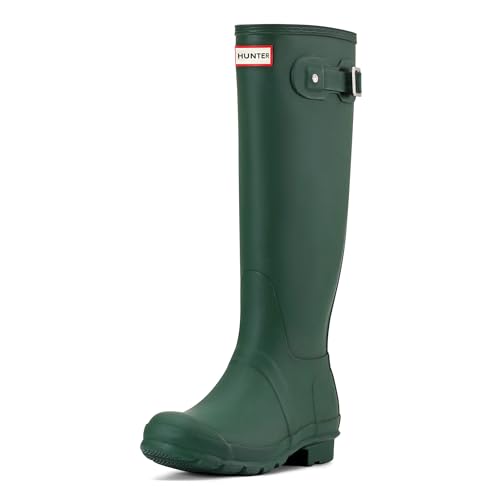 Walks and everyday wear
Hunter Original Tall
|
VS |
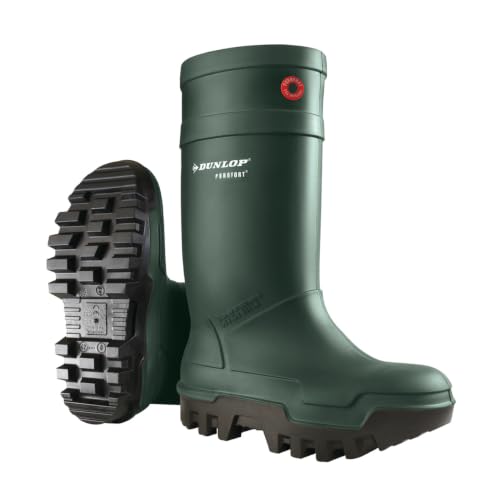 Farm and outdoor work
Dunlop Purofort Thermo+
|
|---|---|---|
|
Natural rubber
|
Material |
Purofort polyurethane
|
|
Textile lined, no insulation
|
Warmth |
Insulated to -50°C
|
|
Heavier
|
Weight |
Noticeably lighter
|
|
Slim, tailored leg
|
Fit |
Roomier, work-boot fit
|
|
None
|
Toe protection |
Protective toecap and midsole
|
|
Needs cleaning and the odd polish
|
Care |
Rinse and go
|
|
€149.25
|
Price |
€127.40
|
| Check price | Check price |
What each boot is made of
This is the difference that matters most, and it explains almost everything else.
The Hunter Original is natural rubber, built up from separate pieces on a last and then vulcanised. That gives it the soft, slightly glossy finish and the flexible ankle people like.
Natural rubber also wants a little looking after, and it can crack along the crease if it's left dirty or dried on a radiator.
Dunlop's Purofort boots are polyurethane. The material is foamed with air under high pressure, and that trapped air is what makes the boot light and warm.
Rubber has no air in it, so a rubber boot is only as warm as the sock inside it.
Warmth on a cold morning
A Hunter Original Tall has no insulation. On a mild wet day in October that's fine. Stand in a frosty yard for an hour in January and you'll feel it, even in thick socks.
Hunter does sell lined versions, but they cost more again.
The Purofort is a different story. A cold yard at 7am is exactly the job it was designed for, and the warmth comes from the material itself rather than a lining that can get wet.
If you mostly walk, you generate your own heat and the Hunter is warm enough. If you mostly stand, go for the Dunlop. Our guide to the warmest wellies covers lined boots for both kinds of day.
Fit and comfort
Hunters have a slim leg and a fitted calf. They look neat with jeans tucked in, and they suit narrow feet and slim calves best.
People with wider calves often find the Original Tall too snug, and Hunter's adjustable-calf versions exist for that reason.
Hunters come in whole sizes only, so if you're between sizes you have to choose, and a thick sock fills a small gap. Our Hunter size guide goes through it in detail.
Dunlops are built for long days on your feet, with a roomier foot and a sole that grips wet concrete and slurry. They look like work boots because they are.
If you have broad feet, the Dunlop is the easier fit, and our page on wellies for wide feet has more options.
The Original Tall is the boot most people picture when they think of wellies. It’s comfortable for a long walk and smart enough for town.
It’s the better choice if your boots spend more time on paths and in car parks than in a farmyard. Keep it clean, dry it at room temperature and it will last for years of weekend use.
It isn’t insulated, so wear a good welly sock from November to March. If you have wide calves, check the adjustable version before you buy.
This is the boot we’d buy for daily work outdoors. The Thermo+ is the warmest boot in Dunlop’s farm range, rated to -50°C, so a frosty yard in January is no bother.
Purofort is light for a boot this warm, which makes a long day easier on your legs.
It has a protective toecap and midsole, handy around cattle and machinery.
It handles cuts and scrapes far better than natural rubber, and cleaning it is a quick hose down. It’s also the easier fit for broad feet.
It won’t win a style contest. If you want one pair that does the farm on weekdays and the beach on Sunday, it still does both.
What the makers say about the materials
Dunlop's own Purofort page says the material contains millions of evenly spread air pockets, which give thermal insulation and keep the boot light. It lists its farm boots as insulated to -20°C, with the Thermo+ model rated to -50°C.
Dunlop makes its boots in Europe, with plants in Portugal and the Netherlands.
Natural rubber has its own advantages. It's soft, it stretches and it grips well on wet stone. The downside is care.
Nokian Footwear, the Finnish boot maker, says in its rubber boot care guide to dry rubber boots at room temperature and store them upright, out of direct sunlight.
Leave a rubber boot in a hot car boot or by the stove and it ages fast.
Natural rubber also comes from plantations, mostly in South East Asia. Rubber is one of the commodities covered by the EU's deforestation regulation, which requires sellers in the EU to show that it wasn't grown on land cleared of forest.
Larger companies have to comply from 30 December 2026.
How long they last
Both brands last for years if you match the boot to the job. Most early failures come from asking a boot to do work it wasn't built for.
A Hunter worn for weekend walks and kept clean will see out many winters. Worn daily in a farmyard, the rubber picks up nicks from wire and stones, and the flex point at the ankle takes a beating.
That's when splits appear.
A Purofort is built for that daily grind. The material resists cuts and abrasion, and it stays flexible in the cold. Where it shows wear is on looks: scuffs and fading that don't affect how it works.
Looking after either pair
Wet boots that never dry out properly are a problem for your feet as well as the boots.
The HSE's page on athlete's foot says you're more likely to get an infection if the skin on your feet stays wet or sweaty.
Rinse mud off with cold water, take the insoles out at night and let the boots dry upright at room temperature. Our guide to drying wet wellies shows how to get a pair dry by morning without cracking the rubber.
Hunters sometimes develop a white, powdery film called bloom. It's a natural part of how rubber ages and doesn't mean the boot is faulty.
Wipe it off with a damp cloth, or use a rubber buffer if you want the shine back. Store them somewhere dry and aired, too: a cupboard of damp boots and coats is how a musty wardrobe starts.
Which pair for Irish weather?
Met Éireann describes the Irish climate with the Atlantic Ocean as its dominant influence, bringing cool, windy winters and moderate to heavy rain in autumn. That means most of us wear wellies in mud and drizzle, rarely in deep snow.
Either boot handles that.
The choice comes down to how you'll use them. For weekend walks and festivals, the Hunter is the nicer boot to wear and look at.
For the farm, or any job where you stand still in the cold, the Dunlop is the better buy.
For more farm options, see our guide to the best wellies for farmers. For walks, see the best wellies for walking, and for women's fits, the best wellies for women.
Hunter vs Dunlop: quick answers
Are Hunter wellies worth the money?
For walking and everyday wear, yes. They’re comfortable and they look good. For daily farm work, a Dunlop Purofort is better value because it lasts longer under hard use and keeps your feet warmer.
Are Dunlop wellies warm?
The Purofort range is. The material holds millions of tiny air pockets that insulate your feet, and Dunlop rates its standard farm boots to -20°C and the Thermo+ to -50°C.
Dunlop’s cheaper PVC boots are not insulated, so check which model you’re buying.
Do Hunter wellies run big or small?
They come in whole sizes only, so if you’re between sizes, try both on with the socks you’ll wear. If you have wide calves, look at the adjustable version.
Which is lighter, Hunter or Dunlop?
The Dunlop Purofort. Polyurethane foamed with air weighs less than solid rubber, which you notice by the end of a long day.