
A wardrobe against a cold outside wall is a mould trap. Why clothes start to smell, how to rescue them, and the cheap fixes that keep a wardrobe dry.
That musty smell on clothes that have hung for a few weeks is mould starting to grow, or the damp that comes before it.
It's common in Irish bedrooms, and the cause is nearly always the same: a wardrobe pushed against an outside wall, with no air moving behind or inside it.
The good news is that it's usually caught early. Most clothes can be saved, and the fixes are cheap.
Why wardrobes go mouldy
An outside wall is the coldest surface in a bedroom, especially behind furniture where the room's heat never reaches.
Warm, damp air from the room drifts in behind the wardrobe and through its doors, meets the cold wall or the cold back panel, and condenses. Nobody sees it, so it carries on all winter.
Inside the wardrobe, the air barely moves. Clothes packed tightly hold moisture against each other. Add a jacket hung up while still damp from the rain, and you've given mould everything it needs.
Four signs to check for
- A musty smell on clothes, or when you open the doors.
- Small grey or black spots on fabric, shoes, bags or the back panel.
- Damp or cold patches on the wall when you pull the wardrobe out.
- Leather or suede going white or furry, often the first thing to show it.
Saving clothes that smell of damp
-
Take everything out
Empty the wardrobe and sort clothes by fabric. Do it near an open window and keep the bedroom door shut.
-
Wash what you can
Wash washable items at the hottest temperature the care label allows, then dry them completely before they go back. Outside on a dry day is best.
-
Send delicates to the cleaners
Wool, silk and tailored items that can’t be washed at home are a job for a dry cleaner. Tell them about the mould.
-
Wipe leather and the wardrobe itself
Wipe leather with a damp cloth and let it air-dry away from a radiator. Clean the inside of the wardrobe the way you’d clean mould on a wall, and let it dry with the doors open for a day.
Some things aren't worth saving. Porous items that stay mouldy after cleaning, such as a heavily affected handbag or a pair of shoes, may have to go.
The US Environmental Protection Agency's mould guide makes the same point about porous materials in general: mould can grow into them and be impossible to remove completely.
Keep it from coming back
- Pull the wardrobe off the wall. A gap of 5 to 10 cm lets air move behind it and keeps the back panel warmer. If you can, move it to an inside wall.
- Never hang anything damp. Let coats and clothes dry fully in the room before they go in.
- Give the clothes space. A packed rail holds moisture. Leave the doors ajar for an hour or two a day.
- Air the wardrobe regularly. The Asthma Society of Ireland recommends airing clothes and wardrobes regularly as part of keeping mould down at home.
A moisture absorber earns its place here
On the condensation page we're sceptical of moisture traps for whole bedrooms, because they can't keep up with the water a sleeping household puts out.
A wardrobe is different: a small, closed space with little air, which is exactly what they're designed for.
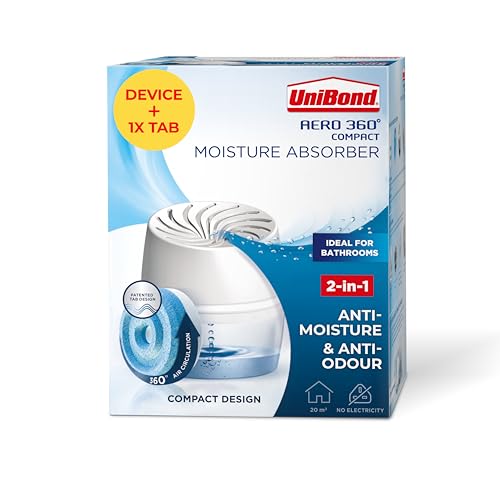
It sits on the wardrobe floor and slowly draws moisture out of the air into a tank below a refill tab, which also neutralises musty smells.
It’s silent, needs no power and has a level window so you can see how much water it has collected.
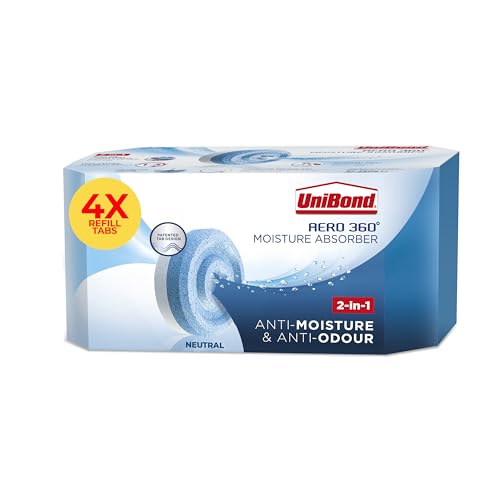
UniBond says a refill lasts up to three months. In a damp wardrobe, check it after a few weeks; a tank that fills fast is telling you the wall behind needs attention.
When the wardrobe isn't the problem
If you find mould on the wall behind the wardrobe, or it comes back within weeks of cleaning, the wardrobe is a symptom.
The bedroom has too much moisture or the wall is too cold, and moisture traps won't fix either.
Measure the humidity in the room for a week; our guide to ideal humidity explains what the readings mean. Then deal with the wall itself, following our guide to black mould in the bedroom.