
Your landlord must keep your home free from damp. How to report it, when to call the council, how the RTB process works and what it costs, step by step.
Irish law is clear on the main point. Under the Housing (Standards for Rented Houses) Regulations 2019, a rented home must be free from damp and structurally sound, inside and out.
Walls, ceilings, windows and floors must not be defective because of dampness.
That doesn't mean every patch of mould is the landlord's fault. Condensation from everyday living is partly in your hands too.
But where the building is letting water in, or the ventilation and heating the law requires aren't there, fixing it is the landlord's job.
What your landlord has to provide
The 2019 regulations set minimum standards that cover more than most tenants realise. For damp, the ones that matter are these:
- A dry, sound building. No damp, and the structure kept in good repair inside and out.
- Ventilation and heating in every room. Each room must be adequately ventilated, with a fixed heater you can control yourself.
- Proper extraction. A cooker hood or extractor fan in the kitchen, and a well-ventilated bathroom with a permanently fixed heater.
- Somewhere to dry clothes. Private landlords must give you access to a washing machine, and a clothes dryer if the property has no private garden or yard.
That last one surprises a lot of renters in apartments. If you have no outdoor space and no dryer, you're being pushed into drying clothes indoors, and that's a damp problem the regulations already address.
Condensation or the building?
Expect a landlord to say the damp is caused by how you live. Sometimes that's partly true: drying clothes on radiators and never opening a window both add moisture that ends up on cold walls.
It's not the end of the argument, though. If the extractor fan doesn't work, the windows won't open, a heater is missing or water is coming in from outside, the problem is the landlord's to fix whatever your habits.
Do what you reasonably can to ventilate and heat the home, and keep a note that you did.
Our condensation guide covers the daily habits, and black mould in the bedroom explains how to clean small patches safely, after you've photographed them.
How to get damp fixed in a rented home
-
Build your evidence first
Take dated photos and videos of the damp and any damage to your belongings. Record the humidity in the worst room over a few weeks, and keep receipts for anything you’ve had to replace.
-
Tell your landlord in writing
Email or letter, so there’s a record. Describe the problem and when it started, and attach photos. You’re obliged to tell the landlord about defects so they can carry out repairs, so this step also protects you.
-
Give them reasonable time and access
Agree times for inspections and repairs. Keep a log of every call and visit. If repairs are done badly or not at all, write again.
-
Ask the council to inspect
If the landlord won’t act, contact the Environmental Health Service of your local authority. Councils enforce the minimum standards and can issue an Improvement Notice listing the work required, then a Prohibition Notice that stops the landlord re-letting the property until it’s fixed. Citizens Information explains how inspections work.
-
Take a dispute to the RTB
For compensation, or if the landlord still won’t comply, apply to the Residential Tenancies Board. Mediation is free; adjudication costs €30 online. Since 14 September 2026, new adjudication hearings are held in public. You can’t be penalised for referring a dispute.
-
Keep paying your rent
Stopping rent puts you in breach of your own obligations and hands the landlord a reason to end the tenancy. Keep paying in full while the problem is dealt with.
Evidence that holds up
A photo shows that mould exists. It doesn't show how bad the air in the room is, or that the problem persists after you've aired and heated it.
That's where a data logger earns its place: it records temperature and humidity automatically, day and night, so you can show weeks of readings rather than one bad morning.
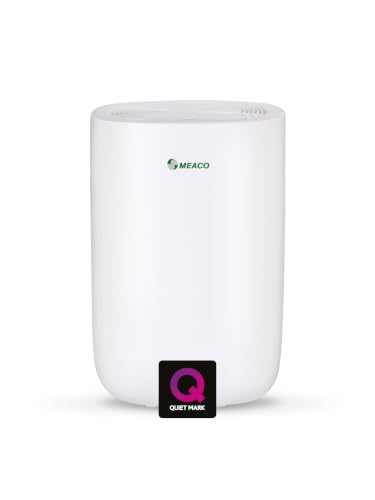
If the room still needs drying while you wait for repairs, a dehumidifier is a reasonable stopgap. It doesn't change the landlord's responsibility, and running one is worth noting in your log as evidence you're doing your part.
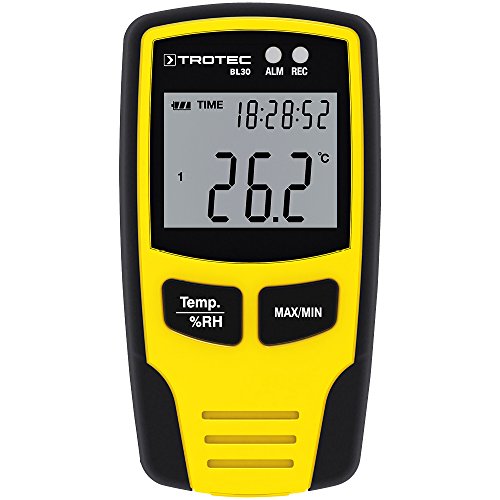
Set it to take a reading every 15 minutes, leave it on a shelf in the worst room, and it builds a dated record of the conditions for weeks.
The included PC software turns that into charts you can attach to a letter, an inspection request or an RTB application.
It’s made by Trotec, a German firm better known for professional damp-measuring equipment, and it’s small enough to sit unnoticed on a bookshelf.
What a tribunal case looks like
The RTB publishes its Tribunal reports, and they show how seriously it takes repair failures. In one Dublin case, a tenant reported leaks in her apartment's ceiling in January 2018, including one over her bed.
Repairs were started and abandoned, a hole was left in the bedroom ceiling, and she and her baby ended up sleeping in the living room for months.
Two things stand out. The tenant reported everything by email and kept the correspondence, including the landlord's agent refusing to communicate except by registered post.
And on Threshold's advice she contacted the council, whose Environmental Health Officer inspected and found the apartment didn't meet the minimum standards.
The Tribunal awarded her €7,200: €4,500 for the distress and disruption, plus €2,700 in costs, most of it rent she'd covered alone after her flatmate left. The landlord's failure to repair breached section 12 of the Residential Tenancies Act 2004.
Every case turns on its own facts, but the pattern is consistent: written complaints, kept correspondence, an independent inspection and dated evidence all carry weight.
Has the law changed recently?
Rental law changed on 1 March 2026, but those changes deal with rent increases and how tenancies can be ended. According to Citizens Information, they don't alter the minimum standards, which still come from the 2019 regulations.
This guide explains the general position for private tenants in Ireland. Your situation may differ, especially if you rent from a council or an approved housing body.
For advice on your own case, contact Threshold, which gives free, independent advice to tenants. Citizens Information sets out tenants’ rights and obligations in full, and the RTB publishes the minimum standards and runs the dispute service.