
Skip the tumble dryer. The heated airer we'd buy for an Irish home, what it really costs per load, and why it works best with a dehumidifier.
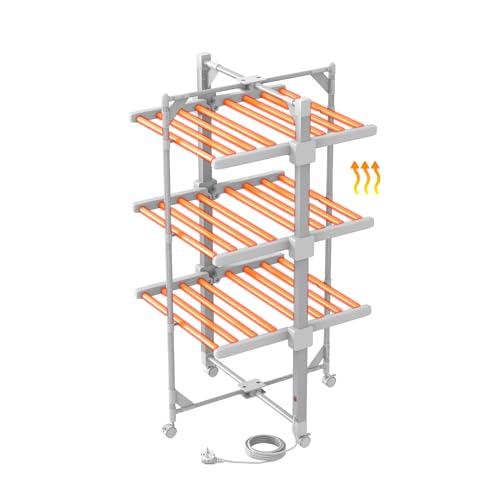
Our pick is the Innotic 230W folding heated airer. At 230W it costs about 8.3c an hour at the typical Irish rate, so a five hour drying session comes to roughly 41c. On a night rate that falls to 18c.
A tumble dryer can cost more than twice as much for the same load.
But a heated airer on its own sends all the water from your washing into the room, and in an Irish winter that ends up on the windows.
The fix is to pair it with a dehumidifier, which is why our second pick isn't an airer at all.
What a load of washing costs to dry
These use the typical standard rate of 36.06c/kWh and a 15.37c night rate.
Drying times vary with the load and the room, so treat them as a guide, and put in your own figures with the heated airer running cost calculator.
The tumble dryer figure assumes a 2kW vented machine running for an hour and a half. Heat pump dryers use far less, but they cost several hundred euro more to buy.
Where the water goes
Every load you dry indoors puts its water into your home's air. A full drum of washing still holds a few litres after the spin cycle, and a heated airer just speeds up how fast that water leaves the clothes.
In a warm, ventilated room that's fine. In a closed bedroom or a small apartment in November, it settles on the coldest surfaces it can find, usually the windows and the wall behind the wardrobe.
A few weeks of that and you're reading our guide to black mould.
So the best set-up isn't the airer on its own. It's a heated airer and a dehumidifier in the same room with the door shut.
The airer pushes the water out of the clothes, the dehumidifier pulls it out of the air, and the windows stay clear.
Our two picks
 01
01
This is a proper full-size heated airer: 24 heated bars, room for a full wash load and wheels so you can roll it between rooms. It folds flat enough to store behind a door.
At 230W it costs 8.3c an hour at the standard rate, or 3.5c on a night rate. The bars warm up within about 15 minutes and top out at around 55°C, warm enough to speed drying without scorching delicates.
There’s no timer or cover included, so a plug-in timer from any hardware shop is worth adding if you want it to switch off overnight.
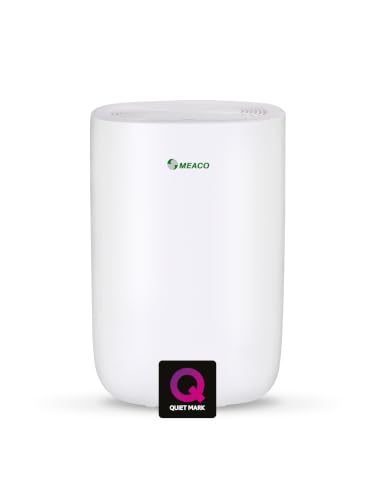
Put this in the same room as the airer and it takes the water out of the air before it reaches your windows. Its laundry mode runs it at full power for six hours, then switches it off.
It adds about 5.4c an hour to the cost of drying. On its own, with clothes on an ordinary unheated rack, it will also dry a load overnight, more slowly than the pair together.
For more on this set-up, and bigger options for a family’s washing, see our guide to dehumidifiers for drying clothes.
What about the Dry:Soon?
Lakeland's Dry:Soon is the heated airer most UK reviews rate highest, largely because of its fitted cover.
It isn't sold through the stores we link to, so it's not one of our picks, but it's a useful benchmark: a cover over any heated airer traps the warm air around the clothes and cuts drying time noticeably.
How to get a load dry overnight
- Spin it hard first. Use the fastest spin your machine allows. Every extra bit of water the drum removes is water the airer doesn't have to drive off.
- Give each item space. Clothes touching each other dry slowly in the middle. Hang heavy items like jeans over two bars.
- Shut the door and run the dehumidifier. The windows stay clear, and the clothes dry faster because the air around them can take up more moisture.
- Use the cheap hours. On a day/night meter, start drying when the night rate begins. A plug-in timer makes this automatic.
Irish advice backs this up. The HSE's guidance for people with asthma suggests drying washing outside where you can.
Respond, the Irish housing association, goes further: if you have to dry clothes indoors, do it in a well-ventilated room, and keep towels off the bathroom radiator.
Heated airer questions
How much does a heated airer cost to run in Ireland?
A 230W airer costs about 8.3c an hour at the typical standard rate of 36.06c/kWh, and about 3.5c on a night rate. A typical five hour session costs 41c, or 18c overnight.
Ireland’s electricity is the dearest in the EU according to Eurostat, so UK running cost figures will look cheaper than what you’ll actually pay.
Is it safe to leave a heated airer on overnight?
Heated airers run at low temperatures and most, including the Innotic, have overheating protection. Follow the manufacturer’s instructions and keep it clear of curtains and bedding. A plug-in timer stops it running all night once the clothes are dry.
Can I use a heated airer in a rented flat with no dryer?
Yes, and for many renters it’s the only practical option. Pair it with a dehumidifier or keep a window open, though, because damp from indoor drying is one of the issues landlords and inspectors look for.
Our guide to damp in a rented house covers who’s responsible for what.
Is a heated airer cheaper than a tumble dryer?
Per hour, by a long way: 230W against around 2,000W for a vented tumble dryer. It takes longer, so the gap per load is smaller, but it still usually works out at well under half the cost.