
Below 10°C, buy a desiccant. Above 15°C, a compressor wins on cost. What each type really costs in euro, and the one we'd buy for each kind of room.
The deciding factor is the temperature of the room, not its size or how damp it is. Get that one thing right and either type will do a good job.
Which type for which room
- Below 10°C Desiccant. A compressor barely removes any water this cold.
- 10°C to 15°C Either works. A desiccant is faster; a compressor is cheaper but slower.
- Above 15°C Compressor. It removes more water for less electricity.
- The catch A desiccant costs two to four times as much to run, though it warms the room as it goes.
Most heated Irish homes sit in the compressor zone for most of the day.
The problem rooms are the ones that drop below 10°C overnight: a north-facing bedroom with the radiator off, a box room used for storage, a utility or a garage.
How each one works
Compressor
A compressor dehumidifier works like a small fridge. It pulls room air over a chilled coil, where the moisture condenses and drips into the tank. The dried air goes back out slightly warmer.
The colder the room, the closer the air already is to the coil's temperature, so less water condenses. Below about 15°C the coil also starts to ice up, and the machine has to stop and defrost.
Meaco's engineers say a compressor in a cold room can spend up to two thirds of its time defrosting instead of drying.
Desiccant
A desiccant dehumidifier has no cold coil. Air passes through a slowly turning wheel coated in an absorbent material, a bit like the silica gel sachets in a shoebox.
A small heater then dries the wheel, and the water is condensed into the tank.
Because it doesn't rely on cold, it keeps working near freezing. The heater is also why it draws more power, and why the air coming out is noticeably warm.
What cold does to a compressor
Meaco publishes test figures for its ABC 12L compressor at different temperatures, and they show the problem clearly.
In a room at 20°C and 60% humidity, it removes about 5.2 litres a day. Drop the room to 10°C and it removes about 1.9 litres, a fall of almost two thirds, while still drawing 125W.
A desiccant doesn't fall off that sharply. EcoAir rates its DD3 Slimline for extraction at temperatures as low as 1°C.
That's the whole argument in two numbers. In a warm room the compressor is the efficient choice. In a cold one, it's spending electricity to achieve very little.
The running cost gap, in euro
Here's what each type costs if you run it every night through an Irish winter.
These figures assume it runs flat out; a model with a humidity setting switches off once the room is dry, so real costs come in lower.
Eight hours a night, October to February
On paper the compressor wins easily. A low-energy compressor costs around €65 a season at the standard rate; a desiccant on its low setting costs more than double that.
Try your own wattage and tariff in the dehumidifier running cost calculator.
The heat a desiccant gives back
There's a fair point on the desiccant's side. Almost all the electricity it uses ends up as heat in the room, along with extra heat released as the water vapour condenses.
In a cold bedroom that's a real benefit. A desiccant on its 330W setting gives off about a third of the warmth of a 1kW electric heater, plus a little extra from the condensing water, and you'll feel it.
Treat that as a trade-off, not a saving. If you'd otherwise heat the room with an electric heater, the desiccant's warmth offsets part of its running cost.
If your heating is gas or oil, which cost less per unit of heat, the desiccant is simply the more expensive way to warm the room.
It also matters what you're trying to achieve. Respond, the Irish housing association, recommends keeping homes at a steady 18°C to 21°C to keep condensation down.
If you can get a bedroom up to that, a compressor becomes the better tool and the cheaper one.
One of each: the two we'd buy
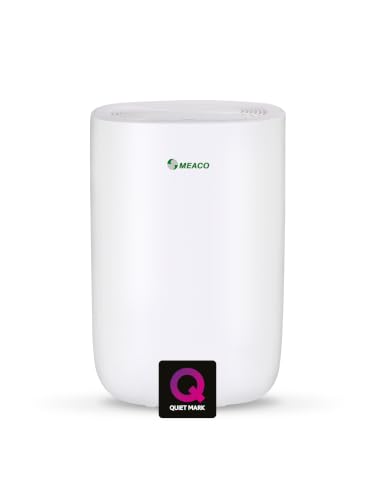 Compressor
MeacoDry ABC 12L
|
VS |
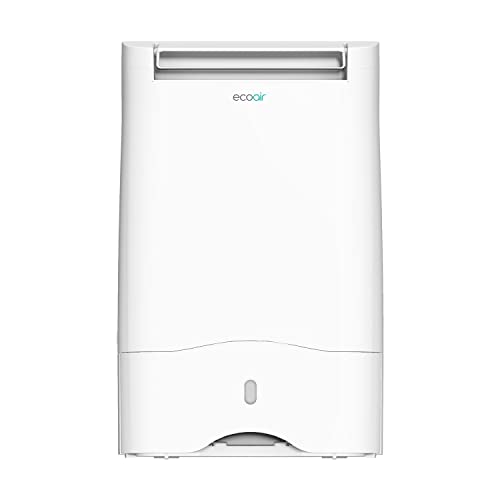 Desiccant
EcoAir DD3 Slimline
|
|---|---|---|
|
Heated, above 15°C
|
Best room |
Cold, down to 1°C
|
|
125W to 165W
|
Power draw |
Not published
|
|
36 dB(A)
|
Noise |
39 dB(A)
|
|
2 years
|
Warranty |
3 years
|
|
€199.00
|
Price |
€321.83
|
| Check price | Check price |
For any room that’s heated for part of the day, this is the cheapest way to keep it dry. It draws 149W at 20°C, which is 5.4c an hour at the standard rate.
It holds a set humidity and switches off once the room reaches it, and it’s quiet enough for a bedroom. Meaco rates it down to 5°C, but as the figures above show, it’s at its best in a warm room.
For the room that never warms up, this is the one.
EcoAir rates it at up to 10 litres a day at temperatures as low as 1°C, and its humidity sensor turns it off once the room hits your target, which takes the edge off the running cost.
It’s light at 6.8 kg, with a carry handle, so moving it between a cold bedroom and the utility on washing day is easy. A swinging louvre spreads the warm, dry air across a clothes airer.
One gap: EcoAir doesn’t publish the Slimline’s wattage. Desiccants in this class typically run at 300W to 750W depending on the setting, so budget on the costs in the table above.
Any space that sits unheated for days at a time needs a desiccant. A compressor will spend most of its time defrosting.
Set the humidity target to around 60% rather than lower. You’re protecting the contents from mould, not making the space comfortable to live in, and every point lower costs more.
Still not sure? Check the room first
Put a cheap thermometer in the room for a week before you buy, and look at the overnight low, not the daytime reading.
If it stays above 15°C, buy a compressor. If it regularly drops below 10°C, buy a desiccant. Somewhere in between, think about whether you can heat the room a little more, because that makes the cheaper compressor work properly.
The Department of Housing's ventilation guidance is worth reading at the same time: a dehumidifier deals with the water in the air, while ventilation stops so much of it building up.
For more compressor options, including bigger models for whole houses and one with a built-in HEPA filter, see our guide to the best dehumidifiers for Irish homes.