
From about 5c to 23c an hour, depending on the type. Work out your own cost with our calculator, plus the night-rate trick that cuts it by more than half.
A typical compressor dehumidifier in a heated Irish room costs about 5.4c an hour to run. Eight hours a night comes to roughly 43c, or around €13 a month.
Desiccant models cost two to four times as much, because they use a heater. Put in your own model and tariff below.
Dehumidifier running cost calculator
Cost = watts ÷ 1,000 × hours × rate. The October to March figure assumes 182 days at your daily hours. Real costs are usually lower, because a dehumidifier with a humidity setting switches off once the room is dry.
Typical costs at a glance
These use the typical standard rate of 36.06c/kWh and eight hours of running a day. A month is 30 days.
Eight hours a day at 36.06c/kWh
Why the type matters more than the size
People expect a bigger dehumidifier to cost more to run. In practice the bigger difference is how it works.
A compressor model chills a coil and lets water condense on it, like a fridge in reverse. Most 10 to 12 litre models draw 120W to 170W. Even a 20 litre compressor rarely goes much past 200W.
A desiccant model pulls moisture into an absorbent wheel, then uses a heater to dry the wheel out. That heater is why it draws 330W or more. Some go up to 650W on a high setting.
The extra cost buys something, though. Desiccants keep working in a cold room where a compressor struggles, and the heat they give off warms the space. Our desiccant vs compressor guide explains when each one makes sense.
The cheapest ones to run
If running cost is your main concern, these two have the lowest published power draw of any dehumidifier we recommend. Both come from Meaco, which publishes wattage at several room temperatures rather than one flattering figure.
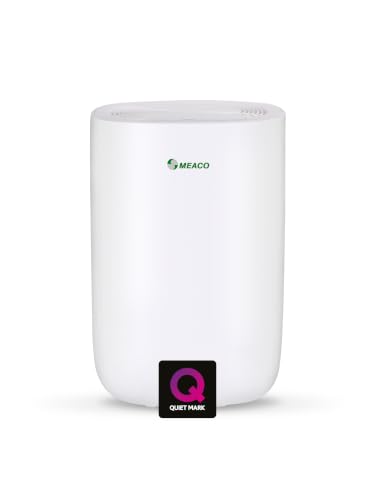
At 149W in a heated room, it costs 5.4c an hour at the typical rate and 2.3c on a night rate.
It also holds a set humidity and switches itself off once the room is dry, so real-world costs come in below the calculator’s figure. A full winter of overnight running on a night rate works out at under €30.
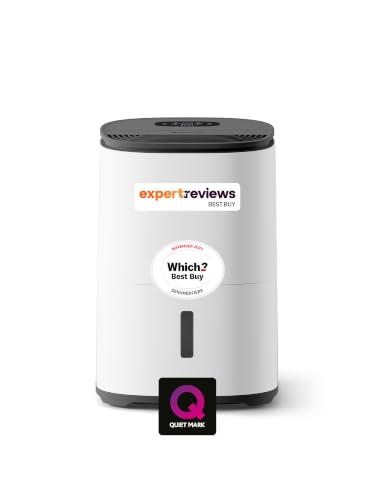
Almost identical running costs to the ABC 12L, at 5.4c an hour in a heated room. It adds an H13 HEPA filter that catches mould spores while it dries the air, and a five year warranty.
Worth the extra if anyone in the house has asthma or a mould allergy.
More options, including bigger models for whole houses, are in our guide to the best dehumidifiers for Irish homes.
Run it at night and pay less than half
The single biggest saving has nothing to do with which machine you buy. It's when you run it.
On a day/night meter or a smart tariff, night units are far cheaper. Energia's night rate, for example, is 14.10c/kWh before VAT, or 15.37c with it. That's about 57% less than the typical standard rate.
Overnight is also when most homes need a dehumidifier. Bedrooms fill with moisture from breathing while the heating is off and the windows are shut.
Set the timer to start when the cheap rate begins and you get the most useful hours at the lowest price.
If you're not sure what meter you have, your bill will show separate day and night readings if you're on a day/night tariff.
Four ways to cut the cost further
- Set a target, don't run it flat out. A humidity setting of 50% to 55% keeps condensation away in most Irish homes. Below that, you're paying to remove moisture you don't need to.
- Close the door and window. A dehumidifier in an open room is trying to dry the whole house and the street outside.
- Clean the filter. A clogged dust filter makes the fan work harder for the same result. Most can be rinsed under the tap.
- Fix the source too. Every litre you stop going into the air is a litre you don't pay to take out. Extractor fans and drying clothes outside where possible both help. The Department of Housing's ventilation guide covers the basics.
Why Irish costs are higher than you'd expect
If UK running-cost figures look suspiciously cheap, there's a reason. Ireland now has the dearest household electricity in the EU.
Eurostat's electricity price statistics put the average Irish household price at €40.42 per 100 kWh in the second half of 2025, once standing charges and levies are spread across each unit, against an EU average of €28.96.
That's why every figure on this site is worked out in euro at Irish rates, not converted from a UK review.
Cost = watts ÷ 1,000 × hours × cent per kWh. The typical standard rate of 36.06c/kWh including VAT is the average Irish unit rate for September 2026. The night rate is Energia’s published 14.10c/kWh plus 9% VAT.
Prices changed in July 2026 and will change again, so we recheck these figures every quarter. Your own bill is always the best source for your rate.
For other appliances, try the appliance running cost calculator, the heated airer cost calculator or the tumble dryer cost per load.