
Stop the damp tonight. Five dehumidifiers worth buying in Ireland, why the litres-per-day figure misleads, and real euro running costs.
For most Irish bedrooms and flats, buy the MeacoDry ABC 12L. It's quiet enough to sleep beside, switches itself off once the room is dry, and costs well under 50c a night to run.
If someone in the house has a mould allergy, pay the extra €27 or so for the Arete One 12L, which adds a HEPA air filter. Bigger homes and heavy indoor drying need the Bosch Dry 4000.
The table below shows all five of our picks side by side, including a quieter Bosch for living areas and a budget option.
The best dehumidifiers for Irish homes
| Rated capacity | Noise | Air filter | Price | ||
|---|---|---|---|---|---|
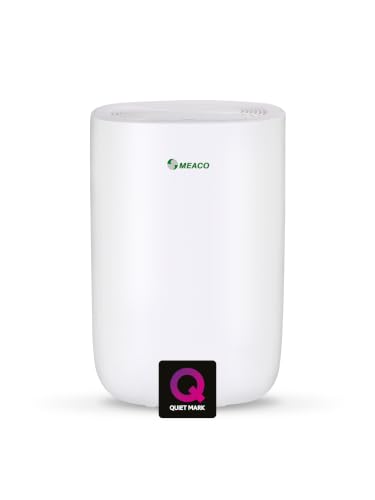
MeacoDry ABC 12L
Best for bedrooms
|
12 L a day | 36 dB(A) | Dust filter | €199.00 | Check price |
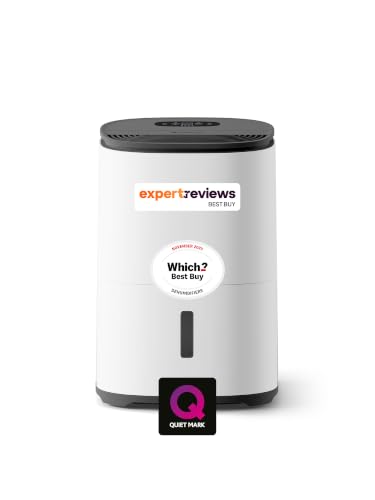
Meaco Arete One 12L
Best for mould allergies
|
12 L a day | 35 dB(A) | H13 HEPA | €225.98 | Check price |
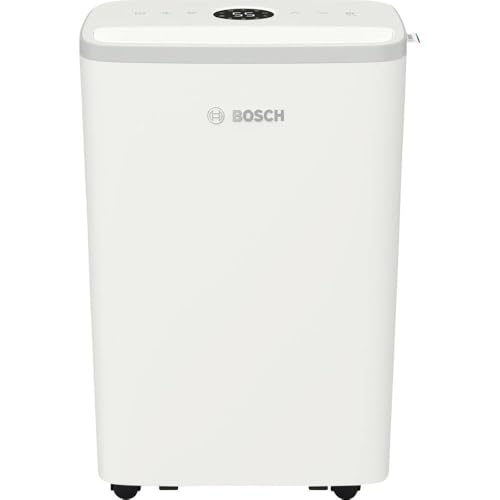
Bosch Dry 2000
Best for living areas
|
12 L a day | 35 dB(A) | Not stated | €243.22 | Check price |
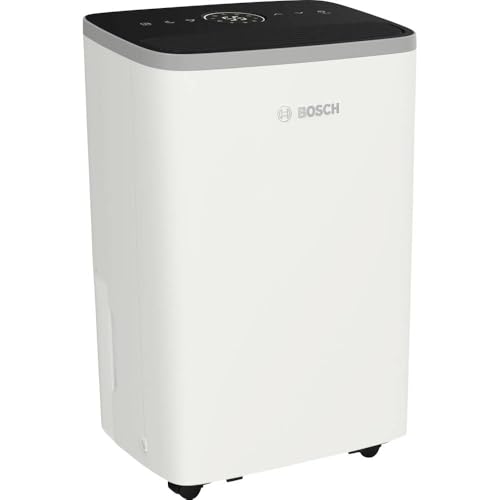
Bosch Dry 4000
Best for bigger homes
|
16 L a day | 38 dB(A) | Not stated | €299.17 | Check price |
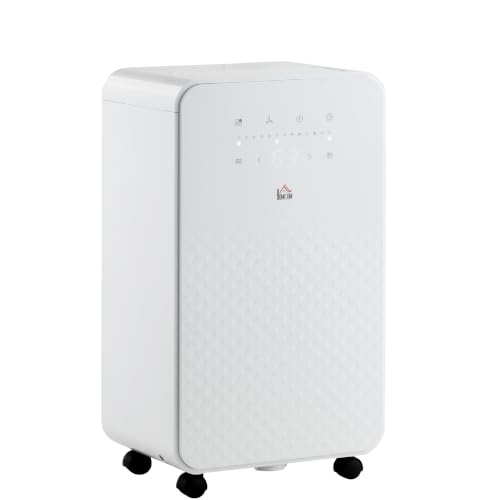
HOMCOM 10L
Best on a budget
|
10 L a day | 39 dB | Carbon filter | €146.99 | Check price |
Why the number on the box doesn't match your bedroom
Every dehumidifier is sold on a litres-per-day figure, and almost nobody gets that figure at home. Manufacturers measure it in warm, very humid air, typically 30°C and 80% humidity, because that's where a compressor works best.
An Irish bedroom on a January night is nothing like that.
Meaco publishes its full test table for the ABC 12L, which makes the gap easy to see:
- At 30°C and 80% humidity: about 12 litres a day. That's the number in the product name.
- At 20°C and 60% humidity, a heated living room in winter: about 5.2 litres a day.
- At 10°C and 80% humidity, a cold room that's also very damp: about 3.7 litres a day.
- At 10°C and 60% humidity, an unheated bedroom: about 1.9 litres a day.
That isn't a fault with Meaco. Every compressor dehumidifier behaves this way, because it works by chilling a coil below the dew point, and in a cold room there's less difference to work with.
Below about 15°C the coil also ices up and the machine spends part of its time defrosting instead of drying. The Arete One 12L's published figures are almost identical.
So the right question isn't "how many litres?" It's "how cold does the room get?"
Match the machine to the room temperature
Most Irish homes fall in the first two rows if the heating comes on morning and evening. Rooms that stay properly cold, such as a box room with the radiator off or a holiday home, belong in the third.
Our desiccant vs compressor guide goes into that choice in detail.
The five, in detail
01
This is the dehumidifier most damp Irish bedrooms need. It holds a set humidity, so once the room reaches the level you’ve chosen it stops drawing power until the air gets damp again.
At 36 to 40 dB(A) at one metre, by Meaco’s own figures, it’s quieter than most fridges, and it carries the Quiet Mark.
The running costs are low because the wattage is low: 125W in a 10°C room and 149W at 20°C.
At the 36.06c/kWh average rate that’s 4.5c to 5.4c an hour, or 43c for an eight hour night in a heated room.
The tank holds 2.6 litres, and a drain spout takes a garden hose if you’d rather not empty it.
It’s rated to run down to 5°C, but as the figures above show, it removes much less water in a cold room. For a bedroom that drops below 10°C, a desiccant is the better tool.
Mechanically it’s close to the ABC 12L, with near enough the same extraction at every temperature and running costs of 130W in a 10°C room and 151W at 20°C.
What the extra money buys is a medical-grade H13 HEPA filter that catches airborne mould spores while the machine dries the room, plus a five year warranty instead of two.
That makes it the one to choose for a bedroom where someone has asthma or reacts to mould, or where you’d otherwise end up buying a separate air purifier.
It’s also among the quietest here, at 35 dB(A) on its low setting. The 2.5 litre tank has no handle, which is a small irritation when it’s full.
Bosch rates the Dry 2000 at up to 12 litres a day for rooms of up to 24 m², which suits a living room or a kitchen diner.
At 35 dB(A) it’s the quieter of the two Bosch models, and its auto mode adjusts the fan to the room’s humidity without you setting a target.
Night and laundry modes cover the two jobs most people buy a dehumidifier for.
Bosch doesn’t publish extraction rates at lower temperatures, so judge it the same way as the 12 litre Meacos: strong in a heated room, much slower in a cold one.
When the damp isn’t confined to one room, more capacity helps.
Bosch rates the Dry 4000 at up to 16 litres a day for rooms of up to 33 m², which covers an open plan ground floor or a landing with several bedrooms off it.
Night mode drops the fan for sleeping, and laundry mode runs it flat out to get a load dry.
Bosch doesn’t publish an average running wattage. European retailers list a maximum draw of 285W, so the worst case is about 10c an hour at the average rate.
In auto mode it throttles back once the room is dry, so real costs sit below that. It’s the pick if you dry clothes indoors most days; see our guide to dehumidifiers for drying clothes.
What about a desiccant model?
Desiccant dehumidifiers pull water out with an absorbent wheel and a small heater instead of a cold coil, so they keep working in a freezing room. They also give off noticeable heat, which a cold bedroom will welcome.
The trade-off is power: Meaco's DD8L draws 330W on its low setting, more than double the ABC 12L.
We'd normally include one here, but the desiccant models we'd choose, including the Meaco DD8L and the Ecoair DD1, aren't available from an Irish seller at the time of writing.
We'll add one as soon as that changes rather than point you at a UK reseller.
What it costs to run in Ireland
Electricity is where Irish buyers get caught out, because UK reviews price everything in pence at UK rates. These figures use the national average unit rate of 36.06c/kWh and a night rate of 15.37c/kWh (Energia's 14.10c plus 9% VAT).
Each one is for eight hours of running.
Running cost per night
| MeacoDry ABC 12L, room at 20°C | 43c a night at the average rate, 18c on a night rate |
| Meaco Arete One 12L, room at 20°C | 44c a night at the average rate, 19c on a night rate |
| Bosch Dry 4000, maximum draw | 82c a night at the average rate, 35c on a night rate |
| Desiccant, low setting (330W) | 95c a night at the average rate, 41c on a night rate |
The night rate is the biggest saving available.
If you have a day/night meter or a smart tariff, set the dehumidifier's timer to run overnight: the ABC 12L in a heated room then costs about €27 for a whole October to February season of 150 nights.
Bosch and HOMCOM don't publish typical wattages, so they're left out of the table rather than guessed. Put in your own figures with the dehumidifier running cost calculator.
Four things worth paying for
This is what keeps running costs down.
The single biggest reason dehumidifiers disappoint in Irish homes.
You’ll want to run it overnight, when electricity is cheapest.
A 2.5 litre tank fills fast in a wet week.
How we picked these five
We haven’t lived with these machines in our own homes. This guide is built from manufacturers’ published test data and Irish electricity prices. How we research explains our approach in full.
-
Checked who's selling
We checked who sells every model on our shortlist in October 2026 and dropped anything available only from a UK reseller or out of stock.
-
Read past the headline figure
We compared extraction rates at 10°C and 20°C wherever the maker publishes them, not just the 30°C number on the box.
-
Costed it in euro
Every running cost uses Irish unit rates and the formula watts ÷ 1,000 × hours × cent per kWh.
-
Matched it to Irish rooms
We weighted quiet running and cold-room performance because Irish bedrooms are cool and are usually where the problem starts. Bosch’s own Dry 4000 product page and Meaco’s published test tables are the sources for the figures above.
Before you buy
What humidity should I set it to?
The US Environmental Protection Agency’s guide to mould and moisture advises keeping indoor humidity below 60%, ideally between 30% and 50%. In an Irish winter, a setting of 50% to 55% is realistic and keeps condensation off the glass.
Our humidity guide explains what each reading means.
Can I sleep with a dehumidifier running?
With a quiet model, yes. Every pick here is rated at around 40 dB or below, roughly the level of a quiet library. Use night mode where there is one, and keep it a couple of metres from the bed.
Will it make the room colder?
No. A compressor dehumidifier gives off a little warmth as it works, and drier air feels less chilly at the same temperature. Desiccant models warm a room noticeably.
Is a dehumidifier enough on its own?
It deals with the moisture, not the cause. Airing rooms and keeping vents open still matter; the Department of Housing’s ventilation guidance treats ventilation as the first line of defence.
Start with our condensation guide, and if mould has already appeared, clean it safely first.
If the air still feels stuffy once it's dry, or a mould allergy is the main worry and you've bought the ABC instead of the Arete, a standalone air purifier is the next step.
Our air purifier guide covers when one earns its place.